Jekyll2026-10-03T14:52:08+00:00https://vamshi.actualyz.com/feed.xmlCircles & LinesEssays on Madhyastha Darshan (Coexistential Philosophy) and how to live with it today, by Vamshi.VamshiEnergy – Part 1 – What you eat decides your energy level2022-10-27T00:00:00+00:002022-10-27T00:00:00+00:00https://vamshi.actualyz.com/2022/10/energy-part-1-what-you-eat-decides-your-energy-levelWe think time is important to complete any task. But it is actually energy. If you have the energy, you’ll finish a task in much less time than when you are not in the mood. Energy is the fundamental currency which determines our ‘output’. Energy determines our relations. Ever felt so exhausted at the end of the day that you just ‘vented’ out badly on your significant half or parents? If only, we had more energy and not exhausted. If only…..
If only we had energy to attend all social events, do all our assignments on time, attend all calls and sleep 8 hours daily…..
So what are the factors, which determine our energy levels. First, it is the diet, excercise and other wellness practices. Second, our focus or motivation to do a ‘certain’ task. Third is the human-to-human relations we have. Let’s focus on the first parameter.
Boosting your energy requires balancing your hormone levels, immune system, and gut health. And a change of diet may greatly improve your hormonal balance and gut health.
Energy Levels = Gut Health + Immune System + Hormone levels
Energy Trifecta
PARAMETER 1: GUT HEALTH:
To improve your energy levels, I have identified certain tips, after going through some literature and books such as ‘I’m so effing tired‘ by Amy Shah and The Energy Plan by James Collins. In fact, this essay is inspired by their writings.
Tip 1 : We have to eat atleast 6 to 8 servings of vegetables daily. This is important because:
Vegetables contain hundreds of phytonutrients, or plant hormones. These have a hormone-balancing effect in the human body.
Plants are also the best source of fiber. Fiber is full of prebiotics that are crucial for gut health. Fiber is full of prebiotics that are crucial for gut health.
Reducing – or cutting out – inflammatory foods like dairy products, meat, and processed sugar.
You should also eat more resistant starches, like white rice and starchy vegetables such as sweet potatoes, carrots and pumpkins. These starches can radically change your gut biome. Our ‘pop-science’ which teaches cooked white-rice is bad is just a myth!!!
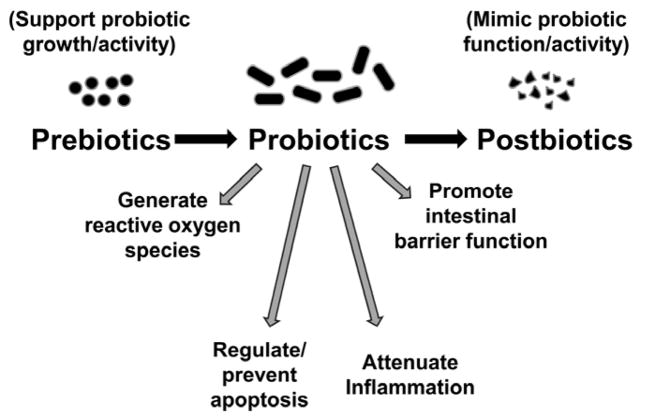
Tip2 : The Sanjeevani for immunity and gut health – Prebiotics, Probiotics and Post-biotics.
What are probiotics?
According to the World Health Organization, probiotics are living strains of bacteria (often referred to as “good bacteria”) which, when consumed in adequate amounts, provide health benefits to the person ingesting them.
Since these types of bacteria are only able to take up temporary residence in the gastrointestinal tract (read: days or weeks at maximum), evidence suggests that in order for probiotics to provide an actual positive impact, they must be consumed on a consistent basis—ideally, daily.
What are prebiotics?
In contrast to probiotics, which are live bacteria, prebiotics are not living organisms—they’re nondigestible food ingredients that strategically support the “good bacteria” that already exist in your gut. Certain prebiotics, such as the ones found in complex carbs, feed the probiotic bacteria so it can grow, while others provide support in different ways (such as by singling out “bad bacteria” to free up space for the good stuff.
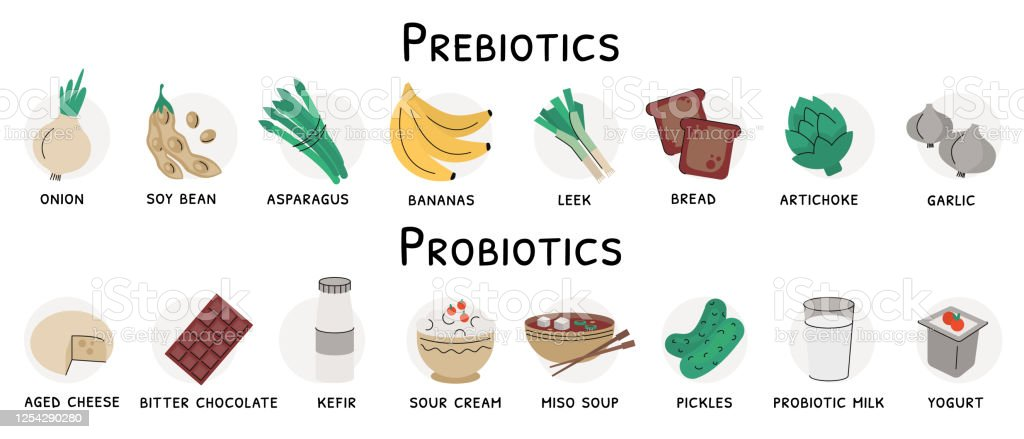
Prebiotic fiber is found in vegetables such as parsnips, radishes, raw banana, flax seeds, Garlic and psyllium husk powder.
I have attached a video and links below, which shows how to prepare certain probiotic drinks and which explain the uses of both prebiotics and probiotics.
What are post-biotics?
Post-biotics are the usable waste formed by probiotics when they eat prebiotics. They act as chemical messengers between your gut and mitochondria, the energy factories in each cell. Foods that boost postbiotic production include cruciferous vegetables like broccoli and cauliflower, as well as alliums like onions and garlic.
Tip 2 b: Avoid highly processed foods, fast-food restaurants and sugar. No matter how you try to justify it, both of these options will only drain your microbiome. If we’re eating a poor diet, experiencing stress, traveling, or taking certain medications, our intestinal flora is stressed and bad-bacteria proliferate. The bloating during travelling, diarrhea during medications etc., is just example of this. This can compared to over 8 magnitude earthquake in our bodies. Inflammation, nutrient absorption and hormones goes off the charts .
Tip 2 c: Another enemy of your gut health is plant proteins called lectins, which are difficult to digest. These are found in breads, pasta, white potatoes, grains, and tomatoes. High-lectin foods are energy-drainers, causing your body to absorb fewer nutrients, your inflammation levels to rise, and your good gut bacteria to die off. Again resistant starches like rice is good, but not maida (refined wheat flour).
Tip 2 d : Be a vegetarian majority of the time. High-protein diets rich in animal products and saturated fats bog down your good bacteria. Before long, your health and energy begin to bog down, too.
PARAMETER 2: IMMUNITY & Inflammation
Inflammation is believed to play a central role in many of the chronic diseases that characterize modern society. Inflammation affects your energy level in three ways.
First, it causes such life-style diseases and ailments that the quality of life is seriously affected.
Second, it depletes your body of energy, which it redirects to create the inflammation.
Third, it makes it more difficult for your body to absorb vital proteins, vitamins, and minerals from food.
untreated causes of acute inflammation, like an infection or injury
an autoimmune disorder, which involves your immune system mistakenly attacking healthy tissue
long-term exposure to irritants, like industrial chemicals or polluted air
Factors like pollutants and auto-immune disorders are not in our hands. It is determined by where our homes are and what is our genetics. But what is in our hands is protecting the ‘saviour’ bacteria of our guts.
Tip 3: Save your Gut-Bacteria as you would save your baby
The post-biotics and the effects of good-bacteria are anti-inflammatory. This is conveyed by scores and scores of studies.
Inflammation may be triggered by structural components of the bacteria which can result in a cascade of inflammatory pathways involving interleukins and other cytokines. Similarly, by-products of metabolic processes in bacteria, including some short-chain fatty acids, can play a role in inhibiting inflammatory processes.
Tip 4: Let’s talk about ‘fats’: length of chain and stability
There are good fats, and then there are bad-fats. This is the story of almost everything in life. Let’s see which of them are good?
Which kind of fats cause inflammation?
The shorter the molecule, the rarer and more anti-inflammatory it is.
Further, fats with stable structure, don’t oxidise easily and therefore don’t cause inflammation. So it is majorly the trans-fats, hydrogenated fats, saturated fats in animal products and damaged and refined oils., which are bad. Some saturated fats like ghee are good, but only should be taken in moderation.
The bad fats cause inflammation in the body, and are linked to diabetes, stroke, and heart disease. Refer to the study below:
…..the evidence suggests that saturated fatty acids induce inflammation in part by mimicking the actions of LPS. (high-fat meals promote endotoxin [e.g., lipopolysaccharide (LPS)] translocation into the bloodstream, stimulating innate immune cells and leading to a transient postprandial inflammatory response.)
The Science of Fatty Acids and Inflammation1,2,3 Kevin L Fritsche*
As explained above, maintaining gut health and eating right fats are the two first steps for improving energy levels.
Parameters of immunity, hormone levels and inflammtion are positively influenced by rest, exercise, intermittent fasting and spiritual practices such as meditation, chanting, community prayers etc., They increase our energy levels, and I will try to cover them in later parts, along with Focus, motivation and human-to-human relations in later posts.
]]>VamshiDiscipline2022-10-25T00:00:00+00:002022-10-25T00:00:00+00:00https://vamshi.actualyz.com/2022/10/disciplineIsn’t it easy if we can ‘JUST DO IT’ (as shown in the funny video below. Watch it and come back to read). If only we can just run 5 km. Just study the subjects in college and get a good CGPA and a good job. Ask me, cramming is really stressful and so is not getting a good job. I know. I was a 6 point someone.
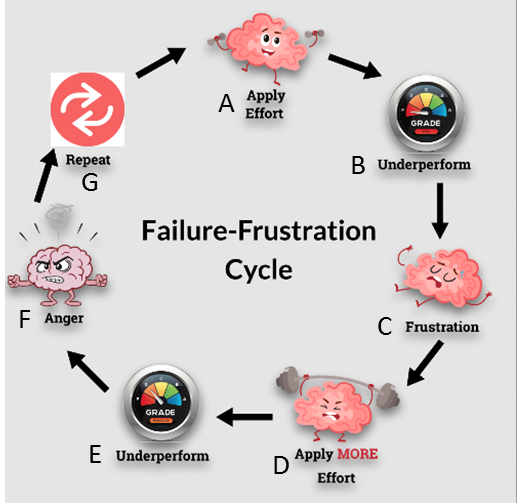
Every person has a truth, and this is my truth. Ever since my childhood, I understood that life is either a journey in a circle or in a line. Let me explain. So many times, I found myself taking up a lofty goal. For some days, I enjoy profoundly, before it turns to boredom. And within some days, I find myself addicted to social media like YouTube etc., This leads to frustration and anger. Why not? After all, I’m wasting away my life. Frustration is warranted. This frustration in turn leads to picking up of either the earlier lofty goal or some other lofty goal.
During preparation of IIT-JEE, I had my own vices. However, I managed to clear the exam. Same is the story with Civil Services Examination and same is the result. But, the truth is there is unnecessary frustration and exertion due to this cyclical nature of Failure-Frustration cycle. I always feel, I could have done much better. It applies for most of the people I know.
Isn’t it better if we just more a small distance everyday on a ‘line’, instead of taking the cyclical route like the infinite ‘samsara’ cycles and arriving at where we started. ‘Don’t we grow and thrive, if we just are better than yesterday?
This was my ‘suffering’. This is cyclical nature at miniature level, over scale of months or years. According to me, this when expanded over the scale of one;s life, is what is ‘cycle of samsara’ and the accompanied suffering.
Can I ever come out of these cycles? Is it even possible to smoothly win out the challenges? It is extremely hard. Probably, handful of people in entire man-kind have cultivated the level of ‘discipline’ which is needed to smoothly take on all the challenges which ‘life’ and ‘evolutionary genes’ throws at man-kind. Probably not. But we should at least ‘try’ to cultivate such discipline.
“What can I not doubt? The reality of suffering. It brooks no arguments. Nihilists cannot undermine it with skepticism. Totalitarians cannot banish it. Cynics cannot escape from its reality. Suffering is real, and the artful infliction of suffering on another, for its own sake, is wrong. That became the cornerstone of my belief.“
– 12 Rules for Life, Jordan Peterson
Dukkha is a fundamental truth of human existence. This implies, preventing unnecessary dukkha should be a core value for every human. After all, this is what Gouthama Buddha has striven for!!
How can we prevent this unnecessary suffering of ‘frustration’ cycle? – Understanding the origin of the this ‘dukkha’.
After searching through my soul, I realised I have limited time and energy, with a level of ‘skill’, not enough to reach my present goals. I was a ‘dreamer’. Desiring something that could not be achieved with the ‘present’ skills, is the cause of ‘frustration’ cycle.
Prevention of dukkha – Strategy : Boringly realistic and Iron-willed discipline
Searching my soul, I had realized that to reach any goals, they should be realistic and person needs to be ‘disciplined’. I understood how ‘discipline’ frees one from the cycle and how it leads to small but incremental growth. The proverbial ‘slow and steady’ really wins the race.
Discipline is a form of ‘mind-control’ and mind is indeed very difficult to restrain. Be lucky, we already have an advice from Lord Krishna.
Lord Krishna said: O mighty-armed son of Kunti, what you say is correct; the mind is indeed very difficult to restrain. But by practice and detachment, it can be controlled.
Part 1 – Practice
Prerequisite of Discipline: Realizing that we are our own master
The first step is realising that ‘mind is a bad master, but a good servant’. Mind can be controlled. With discipline (read practice) and guidance, even wildest elephants can be tamed.
Elevate yourself through the power of your mind, and not degrade yourself, for the mind can be the friend and also the enemy of the self.
Realization leads to some ‘ super powers’ which helps us in ‘Practising’ Discipline
Super Power – 1 – Mind becomes a friend
Mind becomes a friend, only when you realize and practice ‘discipline’. We have power over what course of action we take. This realization leads to recognition that ‘fickleness’ of mind can be ignored and we have power over it. Thoughts and itches come and go. (more on this, later in this write-up).
Super Power – 2 – Creating constancy to form habits via Rituals
Ritual is different from routine. Routines are done mindlessly, on auto-pilot. For instance, after reaching home from office, the automatic look for remote and switching-on TV while laying on couch. That is a routine and not a ritual. Similarly, waking up, whatsapp-ing on the can, bathing and brushing, eating breakfast and pushing yourself to office — these are routines, not rituals.
Rituals are done mindfully, to prepare oneself for the coming day or night. Rituals re-affirm our value systems, our goals, our purpose and our strategies to achieve them. Rituals express our intentions via actions. When you ask ‘why am I doing this?’, you have an ‘intention’ and ‘purpose’ for ritual.
Waking up early – to prepare oneself for an ‘awesome’ day.
Meditation and Exercise – to keep mind and body fit to take up the ‘challenges’ with ease.
Pooja or Prayer – to remind that life is uncertain and nothing really is in our hands, other than our actions.
Instead of simply commuting to office on auto-pilot – listening to a pre-determined podcast or book, and improve the learning can also be a ritual.
Taking a bath and switching off phone after office – to spend time by ‘fully’ being with family, can also be another ritual.
Super Power 3 – Knowing Thyself becomes possible once we are not ‘wasting away’ our lives
We should understand what are our physical limitations. Some can run a marathon. Most cannot. But given enough practice, most of the able-bodied humans can. We should understand, what are the demands of our goals? Expecting a desk-job woman to run a marathon within 20 days ? That leads to failure. But in 60 days? It is possible. In 120 days? More possiblity. 6 months – Definitely for most of us. Push – but push gently and consistently.
I, recently read Jocko Willink’s book (Discipline Equals Freedom) and its pop-culture advice like the one below may be attractive and motivating in the short-term. But it will lead to failure. Motivation dries up, but skills and habits remain.
Really NEED a day off. Good. But not today. Take tomorrow off. If you still need it, take the next day off. Don’t give in to the immediate gratification that is whispering in your ear.
— Jocko Willink. I don’t agree with him here and I believe this is the trap of ubiquitous exciting motivation.
Along with this, we also need to know, what our mental limitations are. I have seen some focussing for 5 hours in one go, completely finishing preparing reports etc., But can one do it everyday? What is our limitation?
Knowing ‘one-self’ sets realistic goals. These goals, help us practice ‘discipline’. This is the path for reaching goals slowly and consistently, instead of spiralling out everyday without reaching anywhere.
Part II: Detachment
What is detachment? We often get too-attached, with our way of doing things. For example, right from my childhood, I have developed a habit of watching T.V while eating dinner. Now, I’m too attached. I can’t change it. We get attached to our cell-phones. So much so that, we carry them into our toilets too. Can we eat dinner mindfully with our significant-halves? Can we stop using our phones after at our will?
Much of our lack of self-discipline is due to accumulated habits and our strong sense of attachment to them.
Why we need detachment?
Mostly we suffer because we compare reality to our wishes and expectations. And since every aspect of our everyday life is dominated by habits that take us out of the present moment, we move far away from reality. Our wishes and expectations go out to ‘fantasy’. Didn’t you ever dream of owning a Ferrari car, or a sizeable villa or of having a chiselled body? We do dream about these. Nothing wrong about dreaming. But everything is wrong about comparing our ‘present reality’ and our ‘fantastical reality’ and then fretting about it.
Everything is wrong, in judging ourselves, others and situations based on what we expect them to be. Everything is wrong in crying about spilled milk, lost opportunities, broken relationships of past.
That’s why we need to be detached from our wishes and expectations. We need to be detached from our cravings and aversions, to see the ‘reality’ as it is. To live in the present. Living in the present is seeing the reality as it is.
How to practice Detachment? The Super-power which leads to the profound ‘Discipline’ needed for artful living
Super Power 4: Anicca
Whatever problems or stress you are experiencing, detach from them. Detach by looking at your cravings (liking) and aversions(hate). Do you really hate your work? Or are you ‘expecting’ your ‘work’ to provide you some prestige to stand out among your peers i.e., boosting your ego. Ask the right questions.
Emotions & Feelings are ‘itch’ – they come and go. Practice meditation to realize this.
As meditators, we come face to face with the impermanence of ourselves. We look at our anger dissipating. We look at our frustrations disappear. This enables us to realize that we have no control over a phenomenon, and that any attempt to manipulate the phenomena creates suffering. We thus learn to develop detachment, an acceptance of anicca, an openness to change, enabling us to live happily amid all the vicissitudes of life.
All things are impermanent when one observes this with insight, then one becomes detached from suffering; this is the path of purification.
Dhammapada 277
Part III: Conclusion
Discipline is needed for achieving day to day goals. It is also needed to live a happy life. Discipline gives one the freedom. Discipline, in its true sense, leads to liberation. This is what I have learnt from ‘Indian’ philosophy.
]]>VamshiImmersed in the Internet2019-01-17T00:00:00+00:002019-01-17T00:00:00+00:00https://vamshi.actualyz.com/2019/01/internetAre you drowned in the internet? I am.
Do fish see water?
“Two young fish swimming along happen to meet an older fish swimming the other way who happily greets them‘Morning boys, how’s the water?’ and the two young fish swim with a careless indifference and eventually one of them looks over at the other and goes ‘What the hell is water?’ ”
We are all swimming in the Internet and not realising how significantly it is changing our lives. All the good changes are welcome, but the inadvertent impacts are HUGEE!!
You don’t believe me? I challenge you to read the entire blog post without opening your phone or any other tab. Were you able to do it?
Could you stop yourself and read the entire blog? Then you are a Modern Buddha.
Heavy internet usage -is a behavioural addiction!!
Do you find yourself watching YouTube at 1 a.m, but you know that you have to go to work early in morning or go to gym.?
Do your children cry for more phone/ computer time and they are not interested in playing outside with other children?
Do you open your facebook or insta feed again and again? You want more and more likes on your post and worried when you don’t get as many?
Do you open your phone again and again without knowing why you opened it? Do you keep checking your mail?
Did you try installing any app to increase productivity — ‘stay focusd’ or ‘pomodoro timer’ etc., as you felt you are spending way more time on social media?
Could you related to any of these pics?
Then someone may be on a slippery slope of internet addiction!!!!
But why? — There is ‘reward mechanism’ in our brain
Why do we, for example: while preparing for an exam, get impulsively moved to watch how many likes our Facebook post has got or open the YouTube ‘watch later ‘ list and start watching automatically? Why do we enter thinking ” I’ll be here for 1 min”,but finally I’ll be end up spending atleast 30 min. Why?
And did you realize that you never feel good or confident about yourself, after looking at YouTube for 2 hours? You always say to yourself “damn, what a waste of time”!!!
The reason for internet fixation:
To browse or not to browse
Do you know why? At the huge risk of risk of Over-simplification, I’ll try to explain in a simple way. To make this knowledge usble.
😇 😇 😇 😇 😇 — What angel says?
😈 😈 😈 😈 😈 😈 — REWARD CIRCUIT MECHANISM
Do what is right!
Do what feels good right now!!
Will-power
Impulsiveness
Benefits are gained in long – term. Delayed gratification
Benefits/ rewards are immediate. Immediate gratification.
The angel is roughly pre-frontal cortex. For ex: Says — wake up early and go to gym
The devil is crudely the reward-circuit mechanism. For ex: eat that pizza – it is tasty!!!
Addictiondecreases functionality of pre-frontal cortex –> reduces will power. (For ex: obese people find it harder to stop themselves from over-eating)
Addiction givemore power to reward system.
Internet – the subtle addiction caused by ‘reward mechanism’
Narcotics are so strongly addictive that the negative effects are obvious. But what about things that are less addictive and cause more subtle changes? — welcome to Internet. Like any addictive drugs, certain ways of using the internet can cause a particularly strong release of dopamine.
Dopamine is a key player in the reward circuit. Dopamine is released in response to receiving a reward or in anticipation of a reward.The purpose of this dopamine is to learn how to get that reward again.
Unexpected rewards and curiosity:
When an unexpected reward comes along, for example: once upon a time, when an early man was strolling along in the forest and saw a water source or a tasty fruit tree, his brain says “hey!!! I didn’t expect this fruit tree!! Awesome!! what did I do to get that reward? And how can we get it again?? It releases dopamine and makes him feel good.
Also in this way the brain initiates learning when getting an unexpected reward was very useful. Dopamine was linked to the fruit tree (unexpected reward) – while exploring forest was the cue for the reward.
Internet – a novelty machine, always creating anticipation for reward and strengthening the devil
Depending on how you use it, the internet can also elevate dopamine to unnatural levels. This is because the internet is a novelty machine, something dopamine is particularly reactive to.
We arewired to crave new information, and new information is interpreted like a reward. If we weren’t curious about new things, we wouldn’t find new sources of water, food or shelter. This novelty is why it’s so easy to watch random news channels about a murder case or find yourself scrolling through social media websites, swiping through apps like imgur or tinder and clicking through YouTube for way longer than you intended. Each of these reward you with some level of novelty for a very easy behavior – swipe of a thumb or click of a finger.
YBut… it doesn’t end. You can still swipe for the chance to get another cool picture so your dopamine remains elevated. This never ending novelty is what leads to the abnormal elevation of dopamine.
Explaining compulsive/ addictive behaviours
Dopamine keeps track of what behaviors done in what situations will get you rewards, and then motivates you to do those behaviors. Browsing forest and exploring forest was the cue and the reward was finding‘something!! something useful and a dopamine release!!.
This explains why cues like seeing a bar where we drink alcohol or seeing a friend smoking cigarette can trigger dopamine rises and therefore cravings in us. It needs some helping hand from prefrontal cortex’s job is to get you to stop. Our angel must be strong.
Why is this novelty machine all the more dangerous?
Easy rewards making addiction very easy
Homeostasis
Design of internet products is done in a such a way to keep you hooked
1. Easy rewards
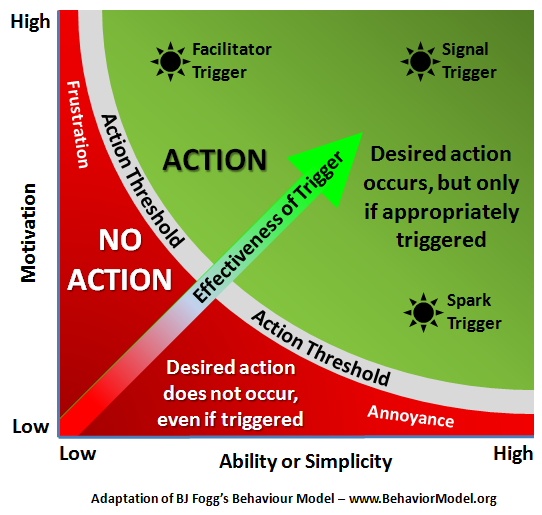
BJ Fogg, a stanford researcher, hypothesized that for any human behavior (B) — the likelihood of these simple actions like clicking a ‘play’ button on youTube, or swipe of a thumb to browse for more feed, done in anticipation of a reward etc., is
Behaviour (B) = Motivation * Ability * Trigger
B.J Fogg
Browsing through internet is’Highly simple’ so to the right on horizontal axis, and the liking the action is High (motivation is high), so high on vertical axis; So almost any trigger on internet, stays above the ‘action threshold’ and the action of ‘browsing’ or watching ‘Youtube’ easily happens.
2. It is easy in the start until it hits a slippery slope – Homeostasis
Why it is harder to get out after it is too late?
Our bodies are constantly trying to remain in a state of balance- this is called “homeostasis”. Things like your blood sugar levels, Ph level, your temperature and blood pressure are all finely regulated.
Stimulation is also something your body tries to regulate. For example, heavy internet users constantly activate dopamine receptors. They browse their feed hoping they find something interesting. Something useful. They are able to ignore 10 useless feeds, to hit the interesting 11th feed. And once they hit, there is a dopamine rise. A small rise is enough to keep us ‘hooked’.
To maintain balance and regulate stimulation, the brain “downregulates” or decreases the number of receptors available and the user becomes less responsible.
Less receptors available means less dopamine signaling and it becomes harder for everyday activities to provide enough dopamine to motivate the heavy internet user.
Because of this, they will start to lose interest in hobbies and long term goals which require much more effort and don’t provide as much dopamine. Receptor downregulation decreases general wanting and motivation to do everyday things. However, craving or wanting for the internet, drastically increases.
Now imagine the ways your and your children’s brains are altering!!
3. The devious ways the internet products/ apps are designed:
I personally have participated in meeting for designing apps. The only agenda is how to keep people ‘Coming back’ to the platform? How to make visitors spend more time?. This appears very unethical, but apps are designed to keep you ‘hooked’.
(review will be done in future) that the key to a successful content platform is having the cue to use the website or application come from within the user.
A negative feeling is most effective – being bored might be a trigger to use Reddit/ YouTube and being lonely would be a trigger to use Tinder or Facebook. This is very powerful because the cue can come at any time and lies ‘within’ the user. Apps should be designed with internal triggers in mind.
Nir Eyal in his book ‘Hooked’ – referring to the internal triggers which make ‘apps’ successful
In Summary – Internet is just like a drug!!
We have seen how our brain works, why reward circuit mechanism of brain is evolved, why internet is so addictive, why once you start becoming dependent on internet — it becomes harder to listen to angel’s voice, why do you have to be aware of internet product’s design which are designed to keep us hooked.
I hope by this article I have explained you, why internet is no less than any addictive drug. The easy ways in which you get a dopamine surge, the easy behaviour needed to get that reward, the ubiquitous presence of internet all of this make internet very very addictive. Especially to children, who are gullible and don’t have a strong angel’s voice. They are still developing their mental faculties!
I’ll be posting in thenext post on how to come out of this ‘internet fixation’,increase productivity and how I started using Internet for my benefit. After all food is a necessity, but if you overeat you become obese. Partying with alcohol in moderate limits, once in a while may be good for our social life. But you all know the disastrous effects of alcohol!!
Same is with Internet, but this is more potent.
]]>VamshiVipassana2019-01-09T00:00:00+00:002019-01-09T00:00:00+00:00https://vamshi.actualyz.com/2019/01/vipassanaMy first retreat and experience
It may be a tall claim, but people who have attended Vipassana can get a vague understanding of what the hot as hell, Lucy, is talking about.
Did you ever feel that 2 people react to the same situation, same stimuli in a very different way? May be that’s what is unique about us, but this shows that the decision making process and response to a situation is different for different people.
To one end of the spectrum there is an impulsive reaction, while to the other end there is calm response. To one end there is a selfish desire satisfaction, while to other end there is a selfless action. Everyone has different opinion about what is the right response to a particular situation. But it varies ever so slightly. To understand this, we have to ‘KNOW THYSELF**”. Know thyself –that ever enigmatic phrase, that phrase which always eludes us.
Why did I go? Knowing thyself.
My decision to go to Vipassana was indirectly a long pending one. I have always been fascinated, as to why some people leave everything and become monks. It seemed to me that they are either stupid or mentally unbalanced. And I when have seen TED Talks on this kind of topic, like this guy’s talk. I clearly remember to myself saying, “If we were happy and content all the time,there is no scope for ambition. Since we are unhappy about carrying weights we invented wheel. We invented motor cars, Air conditioners etc., to free us from discomfort. Man!! Columbus should have re-discovered Americas for money and power etc., as he is not content with who he is right now”I always felt, some unhappiness, some discontent, has made us to reach where we are right now.
The reason we are so comfortable, sure that we won’t die next day because of some random deadly disease, is due to modern day benefits. And the root for all this, I found, was some unhappiness, some discontent, someone running after money and power. So if someone talked to me about happiness thing, I used to be like….
Don’t impose on me this load of happiness thing! Humans need some unhappiness to do, become something. I’m happy with misery.
– earlier me
Also due to so many babas getting caught with honies and monies (refer Nithyananda, Ram Rahim etc.,), all this seemed to be a business model fooling gullibles. Doesn’t it?
But hey!! hey!! Wait a second!! Don’t judge what you have never experienced. If Abdul Kalam, a religious scientist, a man that I adore, talked about spirituality, there should be something. So what is this spirituality? What is happiness? Are we better of being happy, all the time? I read various books regarding these topics. I could sympathise but never empathise with the writers. Never could I be in their ‘shoes’.
Something unsettling
So I wanted to do this for myself. Know atleast a hint of it myself. I wanted to know thyself. And I chose Vipassana. They charged Zero fees for 10 days. Yeah, you heard it right. They give you food, bed, good pollution-free air, security for 10 days. But beware, this is not a vacation!!!
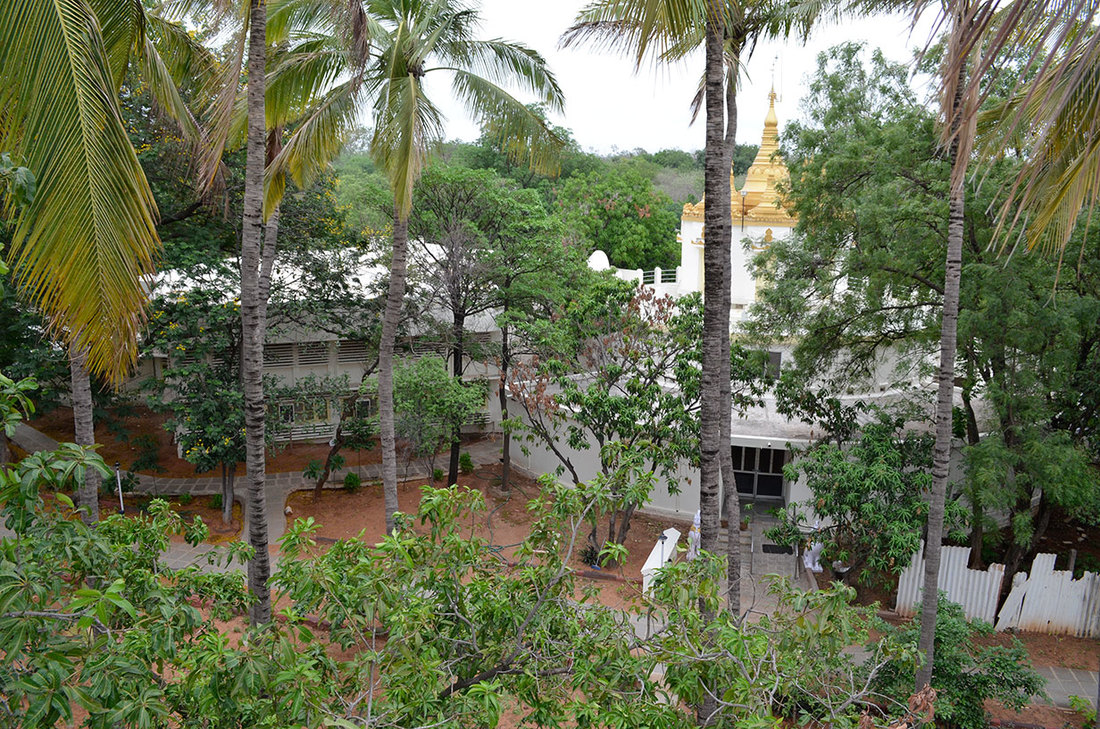
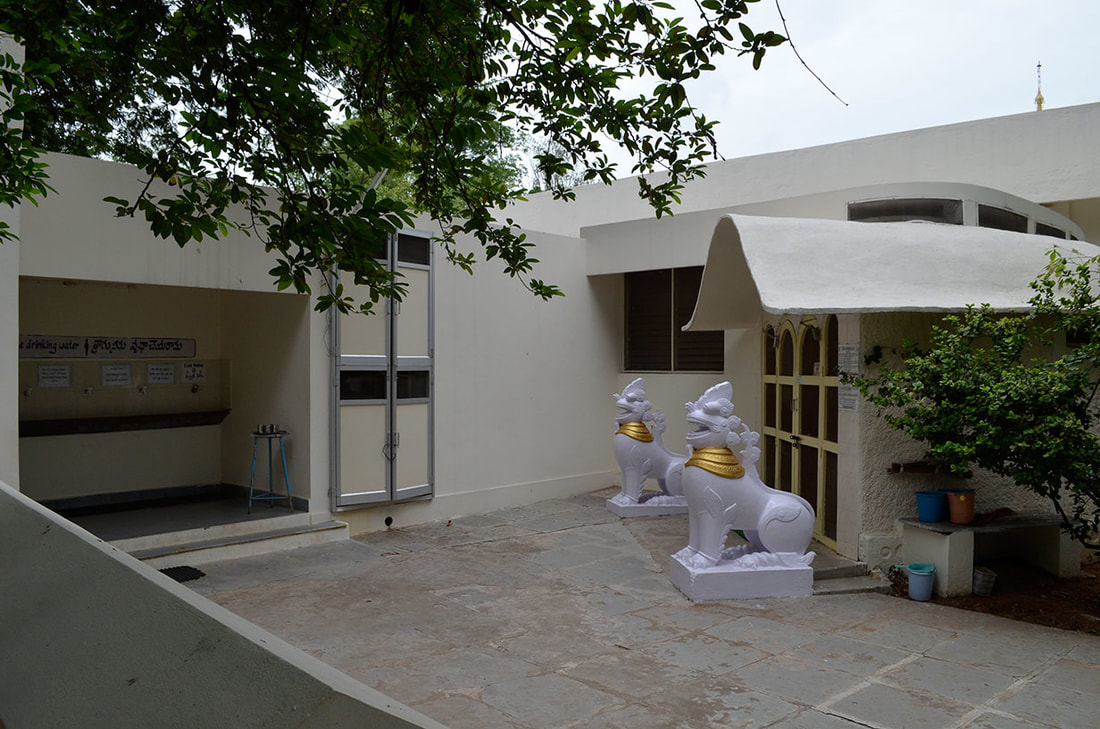
The first time I have gone to Vipassana (10-day session) was in Hyderabad, my home town. It is located on the outskirts, outside of city’s noise limits. The boundaries of the centre contained within it 7 acres of land, a place which was about to be my temple, for next 10 days.
Entrance into Meditation hall
The Pagoda
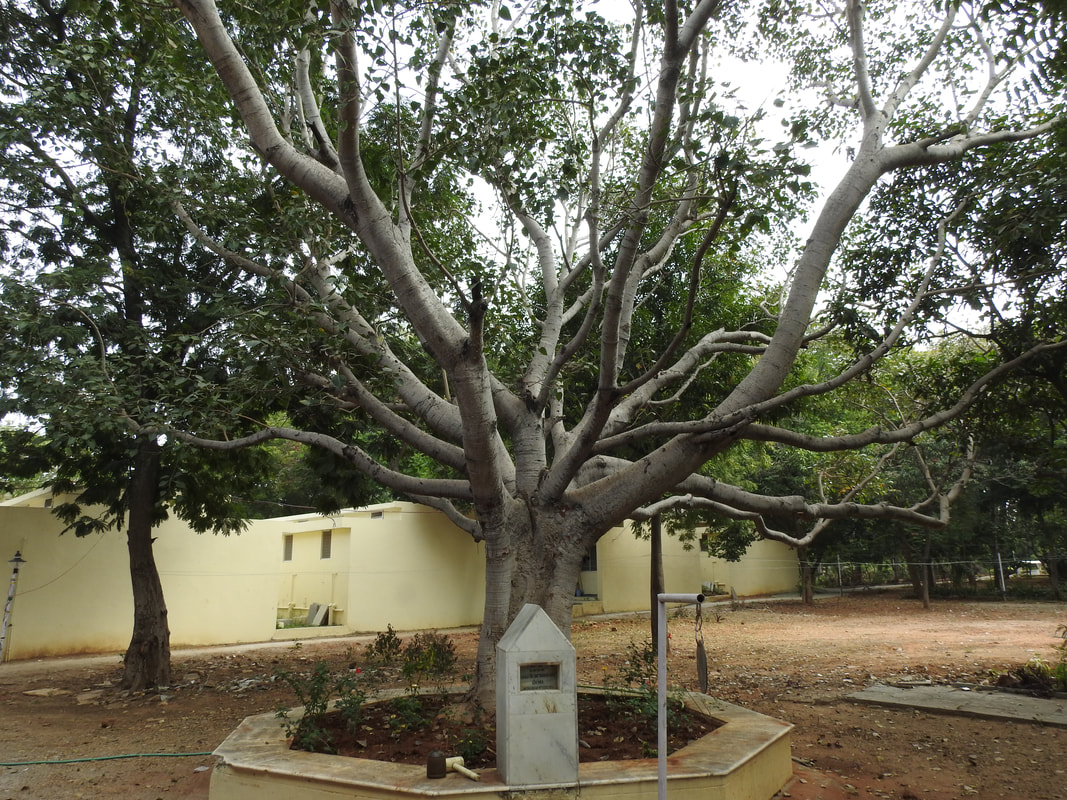
Our own Bodhi? Not sure what it was, but it served to catch a shade
Experience: Day Zero
I have reached late to the center and there were no rooms available. All those registered have come. My calculations failed!! I was anxious and was persuading the senior teacher and assuring him of his doubts that “I’ll not be the one who will run away in between“. And he yielded. Realising many people run away from this, gave a tint of challenge to this journey!!
Had a wonderful discussion with people of various ages and nationalities and we were introduced to the various rules that we are going to follow for the next 10 days.
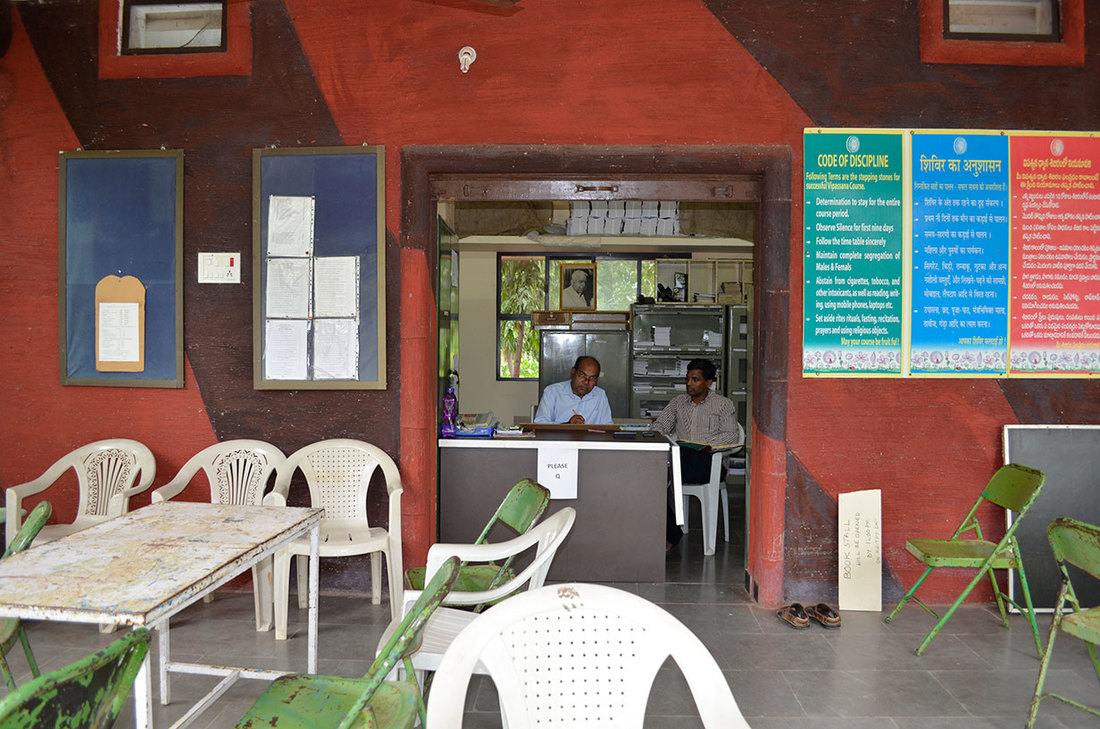
The rules: Code of Discipline
Noble Silence:All students must observe Noble Silence for 10 days. Noble Silence means silence of body, speech, and mind. So you are not allowed to talk to any human, including yourself, for next 10 days.
Boundaries: Seekers have to remain in the boundary of Dhamma Khetta premises for 10 days. Can’t leave in between.
No music, reading, writing: This implies no phones!! no cameras!! not even a pen to record your experiences. Why do you need a pen, when you have to maintain complete mental silence? You are here to just observe. Just observe.
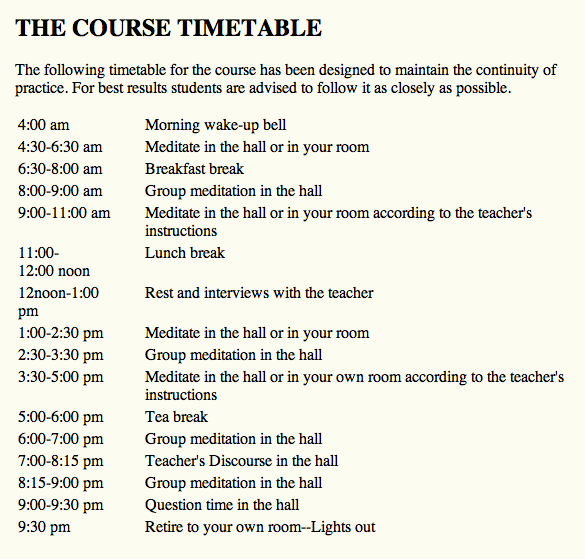
Wake up at 4 am.
Do you think these are strict? Then you don’t know what are you upto, if you join Vipassana. Trust me, this journey was much harder in the starting days. Making the mind chatter stop!! That’s hard!! Also it was boring. After all mind chatter is interesting. You could always think about “How you will play a shot, and win the match in the next tournament!’ Doing something boring, and at the intensity of 12 hours per day. That was difficult!!
We all ate a small meal in the evening at 6:00 pm, some rice with vegetables and fruit. Basic, minimal and essential meal. I never had a sleeping pattern till then, but the vibes there probably made me sleep by 9:00 pm.
Day 1 to Day 3: Struggle, Dead Legs and Train of thought
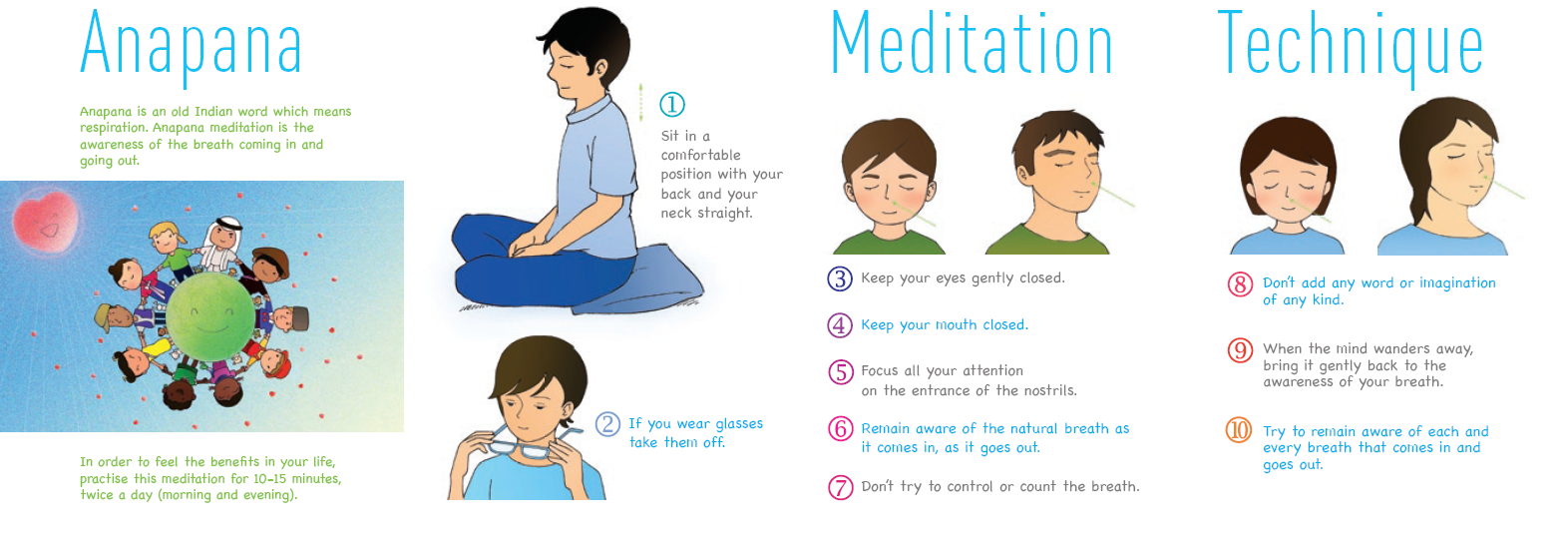
The first 2 days, the technique of Anapana is taught by Mr. S.N. Goenka ji over a speaker. He has passed away, by the way. But I find rather surprising that no one, other than his voice, teaches directly. Supposedly, Vipassana technique was taken
into Burma by Buddha’s disciples during those times. Other than that tradition, technique of Vipassana was lost to the world. And the speaker of the voice has learnt it from the follower of that tradition,
Sayagyi U Ba Khin. To keep it pure, only his voice teaches.
Senior teacher is present at the centre, to answer your doubts. But I took the vow of Noble silence way too seriously and never approached him.
Monkey mind — A wandering mind is an unhappy mind : The first 3 days you mostly learn about Aanapana — i.e, Observation of the breath and bringing the attention back if your monkey mind takes you somewhere else.
Hypothetical situations, Fantasies always making you ‘THE HERO’: This observation of Anapana is necessary. Generally in a normal life the chatter keeps you occupied with day-to-day tasks, day-to-day worries. But since you have suspended all the non-natural activities, stopped talking, there is a real problem of your monkey mind going places. Rolling in the past and rolling the future. Analyzing each and every uncomfortable situation. ”I should have said so and so to the guy who insulted me. I should do this, as a preparation, so that if someone else ever insults me, I’ll say these things.” But in reality, that guy probably didn’t even mean to insult you.
So, the ‘voice’ of S.N.Goenka ji asks us, gently, again and again, to bring your mind back to the breath. His voice didn’t disturb me, as whenever he said ‘keval jaane… beethar aa rh saans ko beethar aarh h aisa jaane…. andar jaa rh saans ko andar aa rh aisa jaane…keval jaane’, I was obviously stuck in some random thought, and would come back promptly.
Only after the ripples subside, you can see the clear water.
Ripples subside: Step into Vipassana:
Then you slowly start observing the nature of breath: cold, hot, rapid, slow, moisture and you are guided to observe any sensations you can feel on the upper lip area. This thing which you are not able to do for 5 mins on day 1, you could easily do for 10-15 mins. Easily!!! That’s the rate which our minds can learn. This is a starting step to Vipassana, which you start doing on the 4th Day.
Believe me, you can feel many sensations on your skin!! There are these sensations everyday, every moment on our own body and since we are so occupied with our daily lives, we never see them. We only feel for example: an itch sometimes, and that is an intense sensation. But subtle ones, they are always there, on your whole body. They are mostly subtle and I could see them due to my chatter going down and increasing attention to the task at hand.
What are these sensations I’m talking about?
Does it feel cringy? If you felt any sensations on your body, you understand what I’m talking about. There are sensations on our body accompanying our mental habits and emotions. (Idea courtesy to Eilona Ariel)
Day 4 to 10: Vipassana
You observe these sensations. And whenever any particular strong emotion comes for example: “Do I really love her? ” “Am I in the right career?” “Do I love my parents, or love them coz they are ‘my’ parents?” there will be associated sensations produced on your body. Just like the above cringe sound has produced some sensations. And now you don’t react. You don’t evaluate. You don’t want more or less of that sensation. You don’t want to ignore or skip that question. YOU JUST OBSERVE. Everything comes and you just observe. And just like that many uncomfortable questions change into easy questions. The tension you never felt existed goes away. And you can feel it. Imagine there is a rope which has numerous knots. As you open the knots you can feel rope is getting free and less tense. This is what happens.
Describing more of this journey may sound like Greek and Latin until you experience Vipassana yourself. I will share a small experience happened with me and how I dealt with my mental reactions and sensations that accompanied. This mature way dealing of with my mental reactions made me grow into a better person.
Growing up in a patriarchial society, I had a deep rooted notion that homosexuals are morally degraded. I used to equate it with incest. On the 4th day, I found a guy, crying in pain. He has got acquainted to me on day 0, before we took the oath of noble silence.
Then on the 5th day afternoon, he requested me to come to his room while having lunch. I could see his swollen eyes and face from crying. He said he was leaving Vipassana. The Japanese volunteer dissuaded him from talking and so he did. That day I felt, if help is not provided to him he may leave and has to suffer again with whatever he was suffering with. So I went, talked to him and tried to persuade him to stay back. He has shared his suffering from last 15 years and mental struggles he faced due to sexual abuse, his sexual orientation and his financial position. Normally, as soon as I heard his sexual orientation, my mind would start judging.
Start evaluating this or that. Mental reactions would flow and accompanying sensations. But that day, I listened. To all the mental reactions and sensations, I said to myself ‘acha! mental reactions have started arising. I will observe them.’ And so, I was able to give my undivided attention to him as I was not distracted and understand his problems clearly, cause whatever emotions I was generating I was not reacting to them. Reacting was a choice now. This felt powerful and liberating. And I was successful in persuasion. He stayed back. And I gained a friend who is still in touch with me. He is more happy for his life now.
The Gist of Vipassana Philosophy
A sound comes into contact with the ear, and the vinnana (Consciousness) notes only the fact that a sound has come. The 2nd part of mind, sanna (perception) works. A sound has come, and from one’s past experience and memories, one recognizes it: a sound. words…words ofpraise/ abuse etc., One gives an evaluation of good or bad, according to one’s past experience. Then comes: vedana sensation. As soon as a sound comes, there is a sensation on the body, but when the perception recognizes it and gives it a valuation, the sensation becomes pleasant or unpleasant, in accordance with that valuation. For example: a sound has come…words…words of praise…good—and one feels a pleasant sensation throughout the body. Or else; a sound has come…words…words of abuse…bad – and one feels an unpleasant sensation throughout the body. Sensations arise on the body, and are felt by the mind; this is the function called vedana. Then the fourth part of the mind starts working: sankhara, reaction. A sound has come…words…words of praise… good…pleasant sensation—and one starts liking it:“This praise is wonderful! I want more!” Or else: a sound has come… words…words of abuse…bad…unpleasant sensation—and one starts disliking it: I can’t bear this abuse, stop it !”
At each of the sense doors, the same process occurs; eyes, ears, nose, tongue, body. Similarly, when a thought or imagination comes into contact with the mind, in the same way a sensation arises on the body, pleasant or unpleasant, and one starts reacting with liking or disliking.
This momentaryliking develops into great craving; this disliking develops into great aversion. One starts tying knots inside. Here is the real seed that gives fruit, the action that will have results: the sankhara, the mental reaction.Every moment one keeps sowing this seed, keeps reacting with liking or disliking, craving or aversion, and by doing so makes oneself miserable.
— Discourse on Day 4 by S.N Goenka
Observation: 1
We only react to Sankharas (mental reactions of our mind), and not external stimulus as such :This is what Lucy in the introductory video is talking about the pain of the guy she just stabbed. This is what S.N.Goenka ji is explaining through his teachings quoted above. We don’t react to external world. We react to our sensations.
Another example would be: Suppose you had a shoulder pain. The sensation would be of pride etc., if it was because you lifted a personal best in your gym. But the sensation would be horrible if you are waiting for test results of cancer, which could be the cause of that shoulder pain. The stimulus of pain is same, but how we feel depends on the mental reactions of our mind.
This applies to everything. I’m talking about pain, as this could be easily felt. In the starting few days, sitting straight cross legged for 10 hours a day used to kill my upper back. My legs used to be dead and I couldn’t stand up when the 1 hour meditation session is finished. But slowly I was able to see the pain lose its power to disturb my concentration. Obviously, my body was adapting, but I was also learning to respond to any external stimulus in a very different way.
Also modern research is finding similar results: This will be covered in a later blog post
We construct our imagined reality day in and day out:
Your neighbor is probably not intending to disturb you, by playing loud music. Your car mechanic is probably not trying to loot you. Your examiner is probably not giving tough questions only this year. The colleague with whom you had a fight, probably doesn’t have any ego issues. People from other religion are probably not trying to harm your political interests. The government officer who is delaying your work in your locality, is probably not waiting for a bribe. Concepts of religion and nationhood are not really ‘real’. These are notions we construct day-in and day-out from childhood and make them part of our lives. They are a part of our identity. Some inhuman activities also happen on the basis of these notions, as we don’t see them in the right form.
We SEE a corrupted form of reality : We do believe in various similar things. We are by nature; living in our own constructs and obsessing about ourselves. Just close your eyes and please sit calmly for 5 mins. You would know this statement is true. I feel our mind chatter, is programmed to keep rolling ‘us’ in ‘past’ and ‘future’. We do have thoughts of how pleasant the atmosphere is, how good the scent of the room etc., when we sit for 5mins, but slowly thoughts with the words ‘I’, ‘you’ ‘my’ and your ‘constructs’ start coming. Slowly the train of thought starts, where the alternative realities, imagined realities are created. For ex: “If I were my boss I would treat my employees like this that” start coming. **And when your imagined reality doesn’t match with the present reality, you feel dissatisfied.** **When your constructs are falsified you get stressed.**
World revolves around ‘I’: And this ‘world’, this world which ‘revolves’ around us, we are bound to get anxious, worried. Do you get anxious if one of your neighbour had a fight with another neighbour? May be some. But when the fight is with you, your anxiety level definitely increases. Similarly when we see, as our mind guides us to believe, the whole world ‘revolving’ around us, we get more anxious and stressed out.
Your imagined reality doesn’t match with the outside reality and you feel dissatisfied. When **your constructs are falsified you get stressed**.
“You are breaking a lifetime habit of walking around in a fog, in a daydream of projection into the future and rumination into the past and”
Dan Harris
Most our beliefs and constructs (like religion, nationality, morality etc.,) have some ‘degree of corrupted reality‘ as its basis and so does our personality based on it: These beliefs were created by our mind, re-inforcing our previously held beliefs, by constant creation of similar thoughts.
Imagine your personality as a wall made by many bricks which are your beliefs. Every brick/ belief has a some part, some significantly, some in minutely, filled with this corrupted reality –> where you were the centre, where your constructs are the centre. And this is sustained by regular, similar thoughts. Just imagine a person/ political party you hate or have contempt. You forget why you hate now. But you hate. All these bricks were created putting yourself/ your constructs in the centre, with some deviation from reality. This, our mind has been doing for the whole of our life.
Safai: And by Vipassana you start purging, as now you are not evaluating your pattern of thoughts. You only watch from a distance, and you yourself will not get carried away by a whirl of emotions that accompany. Now your personality will be based on reality. Irrationality gets tamed.
Observation 4: Space between external stimulus and response increases.
There is difference between reacting responding to any situation. A small experience which I had during vipassana.
Dhamma Khetta had fortune of a Christian Missionary organisation bringing its future pastors to the centre for 10 day course. And there was this one boy, who used to sit infront of me in the meditation hall, enjoying these sessions so much that he was cruising on. He returned my unattended wallet, which I carried into the hall fearing that someone would steal. But during the time I didn’t find it, I didn’t panic. Thoughts have automatically started scolding and reprimanding me. How could I be so careless? How will you go home from Vipassana center? You have to apply for all Id-cards!! But I instinctively went to my breath for 10 secs. and realized I should go complain, and move on. I found a space in which I got time to respond, not react. Earlier I used to know that there is no point in worrying, but worried anyways. Now I didn’t worry. For an impulsive person like me, this was a very different reaction.
React or respond: Normally after losing my wallet, I would not be surprised if I had a bad mood for 1 or 2 hours. Now there was no bad mood coz I found myself having a space betwenexternal stimulus, here losing my wallet. Reaction expected would be bad mood, anxiety etc., Response was: I complained
officially
and returned back to the task at hand. Finally that young man I talked about earlier returned me the wallet in the evening tea time.
Finding this space between external stimulus/ conditions and response is very helpful, very liberating. This creates emotional maturity. Here in the video the effects on prisoners is being discussed by the speaker:
A rape victim may take the impulsive step of suicide. My friend in Vipassana faced depression for long time. The victim’s mental challenges are in-comprehensible for most of us. But if they find this space and a realisation that they can choose to respond, not just react to the situation and that would really help them. This space helped him.
Observation 5: Impermanence and importance of ‘present’
Art thou in misery, brother? Then I pray Be comforted. Thy grief shall pass away. Art thou elated? Ah, be not too gay; temper thy joy: this, too, shall pass away. Art thou in danger? Still let reason sway, and cling to hope: this, too, shall pass away. Tempted art thou? I all thine anguish lay one truth to heart: this, too, shall pass away. Do rays of loftier glory round thee play? Kinglike art thou? This, too, shall pass away! Whate’er thou art, where’er thy footsteps stray, Heed these wise words: This, too, shall pass away.
Paul Hamilton Hayne
Everything passes away. That itch on your back don’t do anything, it will pass away. All the thoughts, emotions etc., they do pass away. The sensations you observe in Vipassana, it does pass away. The nature of reality is impermanence and this makes “present” all the more important.
All the vipassana friends when they came out of Noble silence talked about this. Present is the most valuable gift given to us by time.
Observation 6: Practice daily
I found myself doing Vipassana intermittently on and off as I got busy with my daily life. And the mental reactions I developed during 25 years of my life are bound to win over the knowledge gained in Vipassana. Knowledge is different from wisdom. Only after a recent impulsive reaction, I found myself back to square one. I found myself moving in circles. Wisdom is only gained by daily practice.
Finally I would end this post by saying, there is lot we can gain from this internal understanding. This is just not hocus pocus as I used to feel.