My first retreat and experience
It may be a tall claim, but people who have attended Vipassana can get a vague understanding of what the hot as hell, Lucy, is talking about.
Did you ever feel that 2 people react to the same situation, same stimuli in a very different way? May be that’s what is unique about us, but this shows that the decision making process and response to a situation is different for different people.
To one end of the spectrum there is an impulsive reaction, while to the other end there is calm response. To one end there is a selfish desire satisfaction, while to other end there is a selfless action. Everyone has different opinion about what is the right response to a particular situation. But it varies ever so slightly. To understand this, we have to ‘KNOW THYSELF**”. Know thyself –that ever enigmatic phrase, that phrase which always eludes us.
Why did I go? Knowing thyself.
My decision to go to Vipassana was indirectly a long pending one. I have always been fascinated, as to why some people leave everything and become monks. It seemed to me that they are either stupid or mentally unbalanced. And I when have seen TED Talks on this kind of topic, like this guy’s talk. I clearly remember to myself saying, “If we were happy and content all the time, there is no scope for ambition. Since we are unhappy about carrying weights we invented wheel. We invented motor cars, Air conditioners etc., to free us from discomfort. Man!! Columbus should have re-discovered Americas for money and power etc., as he is not content with who he is right now”I always felt, some unhappiness, some discontent, has made us to reach where we are right now.
The reason we are so comfortable, sure that we won’t die next day because of some random deadly disease, is due to modern day benefits. And the root for all this, I found, was some unhappiness, some discontent, someone running after money and power. So if someone talked to me about happiness thing, I used to be like….
Don’t impose on me this load of happiness thing! Humans need some unhappiness to do, become something. I’m happy with misery.
– earlier me
Also due to so many babas getting caught with honies and monies (refer Nithyananda, Ram Rahim etc.,), all this seemed to be a business model fooling gullibles. Doesn’t it?
But hey!! hey!! Wait a second!! Don’t judge what you have never experienced. If Abdul Kalam, a religious scientist, a man that I adore, talked about spirituality, there should be something. So what is this spirituality? What is happiness? Are we better of being happy, all the time? I read various books regarding these topics. I could sympathise but never empathise with the writers. Never could I be in their ‘shoes’.
Something unsettling
So I wanted to do this for myself. Know atleast a hint of it myself. I wanted to know thyself. And I chose Vipassana. They charged Zero fees for 10 days. Yeah, you heard it right. They give you food, bed, good pollution-free air, security for 10 days. But beware, this is not a vacation!!!
The first time I have gone to Vipassana (10-day session) was in Hyderabad, my home town. It is located on the outskirts, outside of city’s noise limits. The boundaries of the centre contained within it 7 acres of land, a place which was about to be my temple, for next 10 days.
-
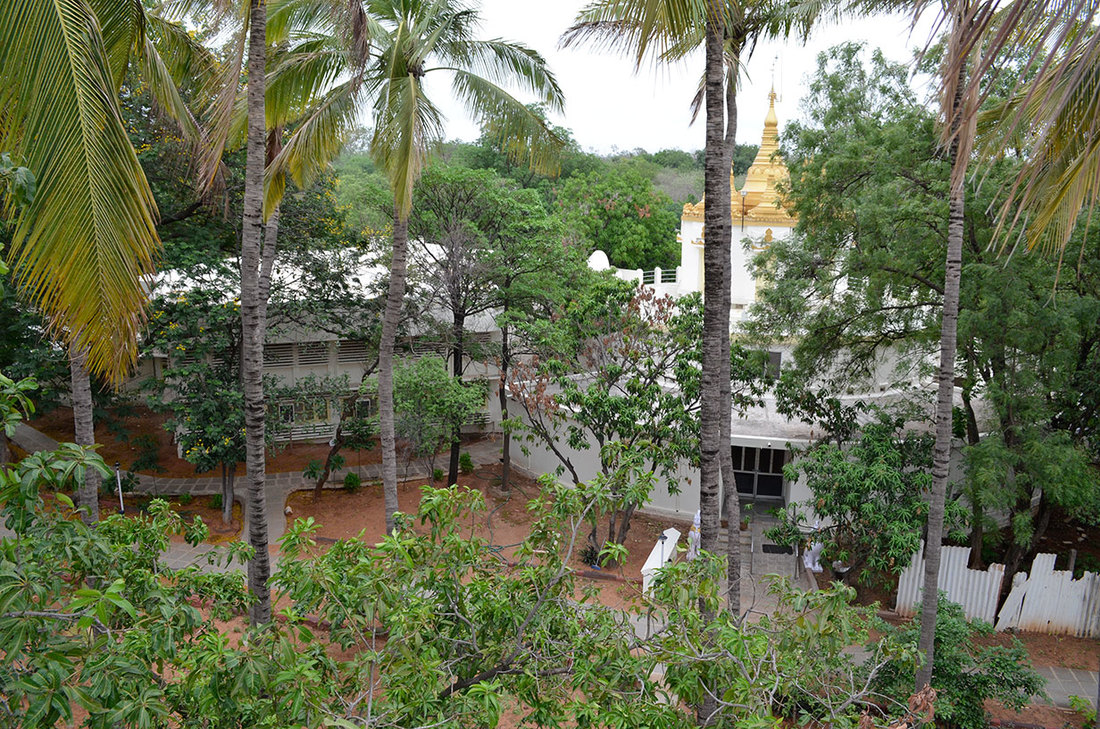
-
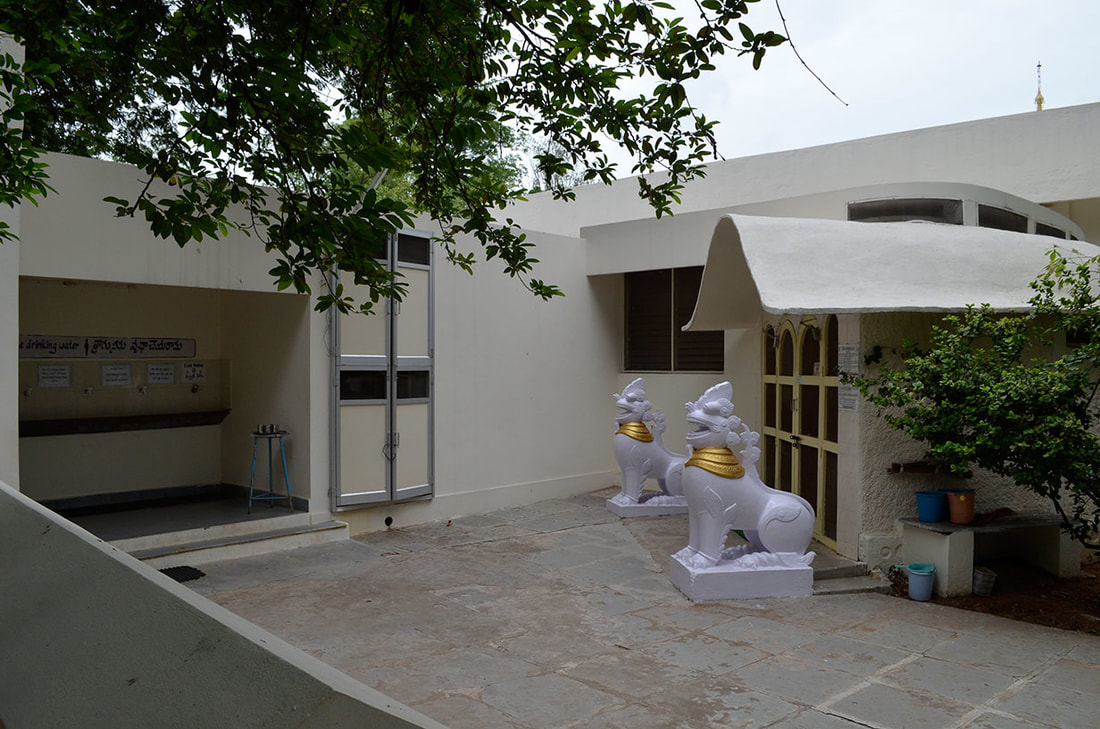
Entrance into Meditation hall -
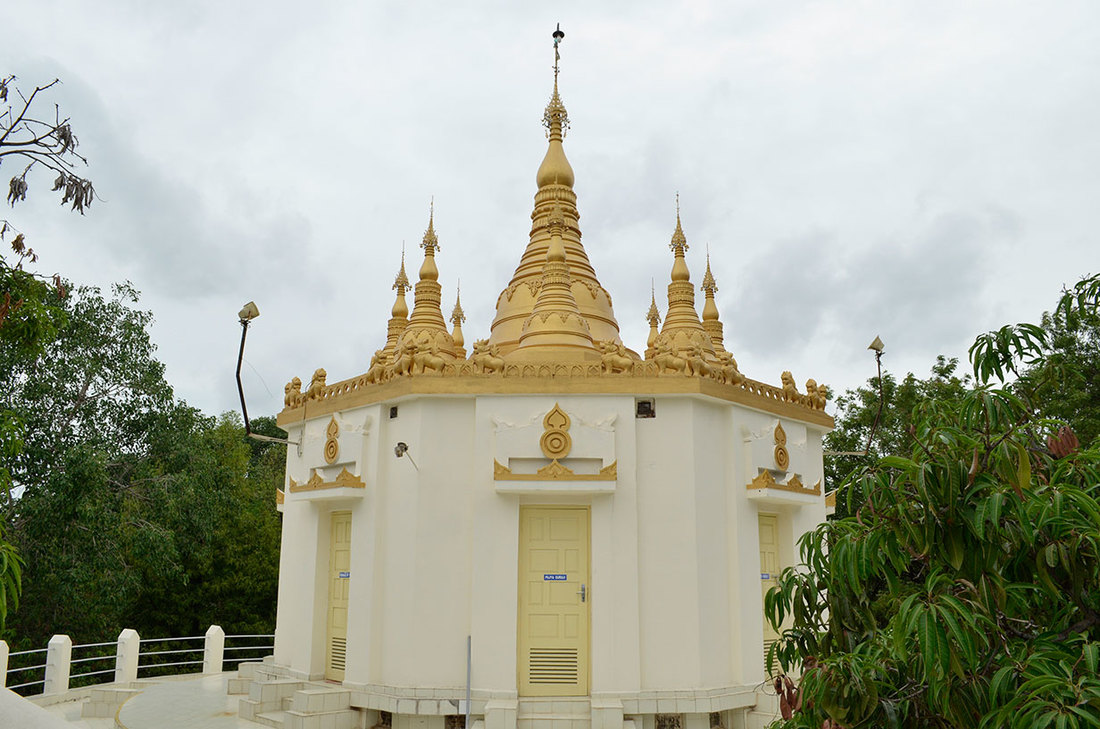
The Pagoda -
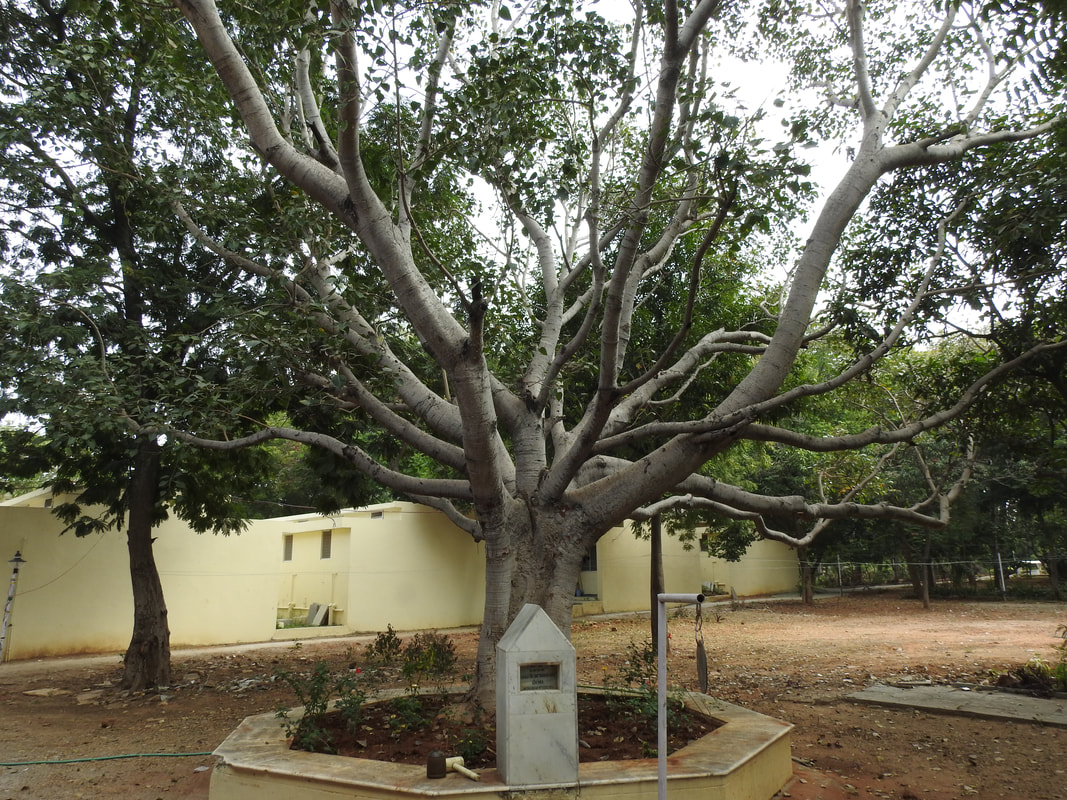
Our own Bodhi? Not sure what it was, but it served to catch a shade
Experience: Day Zero
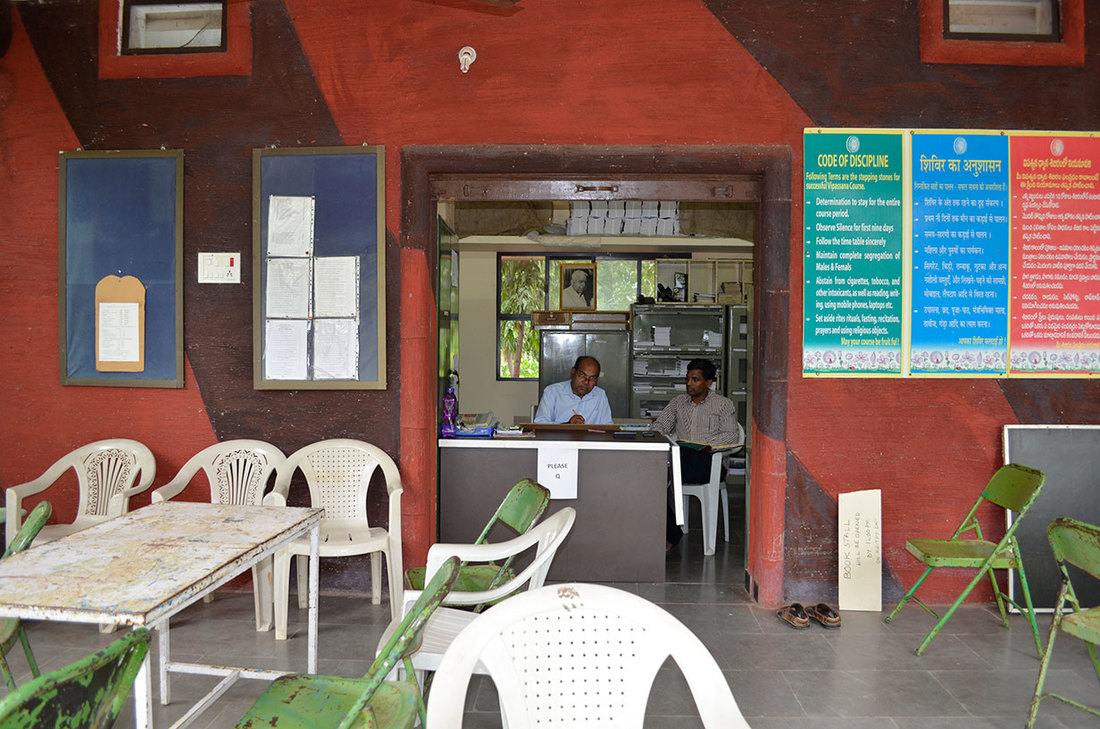
I have reached late to the center and there were no rooms available. All those registered have come. My calculations failed!! I was anxious and was persuading the senior teacher and assuring him of his doubts that “I’ll not be the one who will run away in between“. And he yielded. Realising many people run away from this, gave a tint of challenge to this journey!!
Had a wonderful discussion with people of various ages and nationalities and we were introduced to the various rules that we are going to follow for the next 10 days.
The rules: Code of Discipline
- Noble Silence:All students must observe Noble Silence for 10 days. Noble Silence means silence of body, speech, and mind. So you are not allowed to talk to any human, including yourself, for next 10 days.
- Boundaries: Seekers have to remain in the boundary of Dhamma Khetta premises for 10 days. Can’t leave in between.
- No music, reading, writing: This implies no phones!! no cameras!! not even a pen to record your experiences. Why do you need a pen, when you have to maintain complete mental silence? You are here to just observe. Just observe.
- Wake up at 4 am.
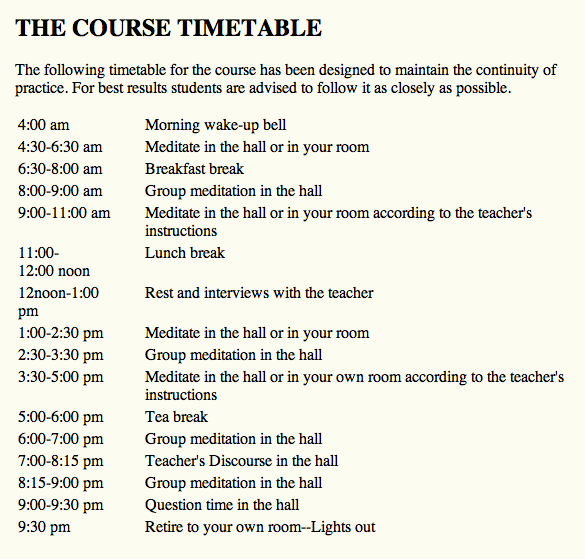
Do you think these are strict? Then you don’t know what are you upto, if you join Vipassana. Trust me, this journey was much harder in the starting days. Making the mind chatter stop!! That’s hard!! Also it was boring. After all mind chatter is interesting. You could always think about “How you will play a shot, and win the match in the next tournament!’ Doing something boring, and at the intensity of 12 hours per day. That was difficult!!
We all ate a small meal in the evening at 6:00 pm, some rice with vegetables and fruit. Basic, minimal and essential meal. I never had a sleeping pattern till then, but the vibes there probably made me sleep by 9:00 pm.
For the whole rules and timetable please refer to: https://www.dhamma.org/en/about/code
Day 1 to Day 3: Struggle, Dead Legs and Train of thought
The first 2 days, the technique of Anapana is taught by Mr. S.N. Goenka ji over a speaker. He has passed away, by the way. But I find rather surprising that no one, other than his voice, teaches directly. Supposedly, Vipassana technique was taken
into Burma by Buddha’s disciples during those times. Other than that tradition, technique of Vipassana was lost to the world. And the speaker of the voice has learnt it from the follower of that tradition,
Sayagyi U Ba Khin. To keep it pure, only his voice teaches.
Senior teacher is present at the centre, to answer your doubts. But I took the vow of Noble silence way too seriously and never approached him.
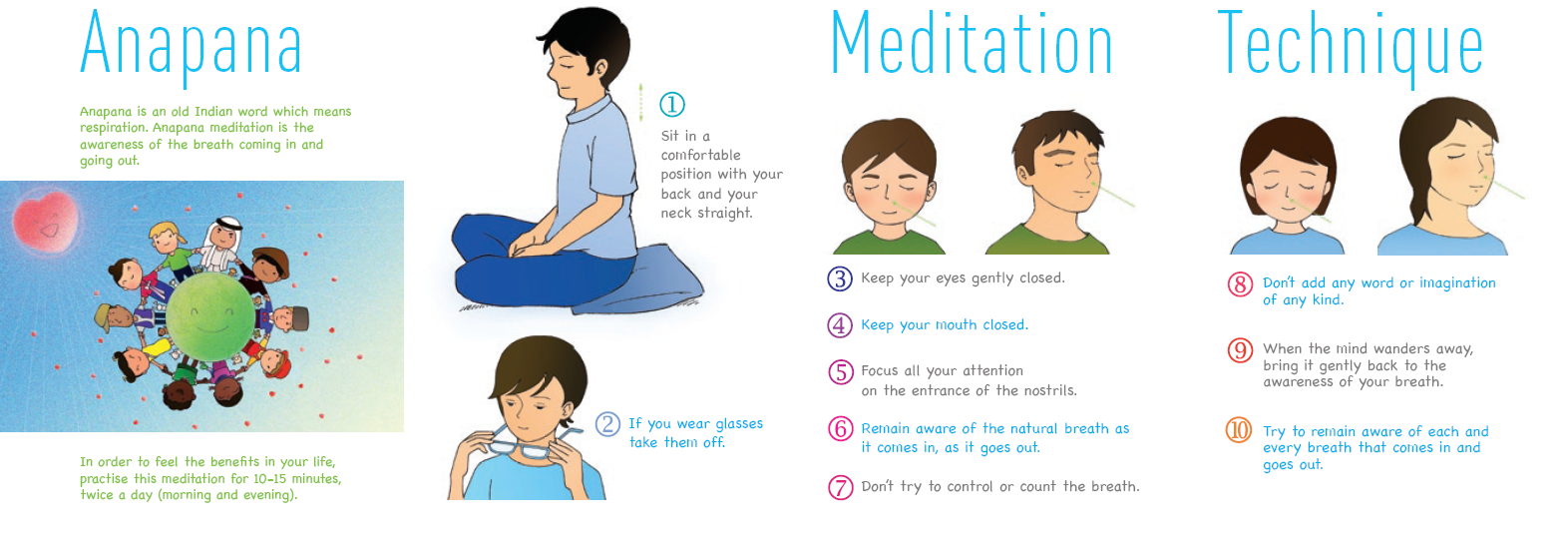
Monkey mind — A wandering mind is an unhappy mind : The first 3 days you mostly learn about Aanapana — i.e, Observation of the breath and bringing the attention back if your monkey mind takes you somewhere else.
Hypothetical situations, Fantasies always making you ‘THE HERO’: This observation of Anapana is necessary. Generally in a normal life the chatter keeps you occupied with day-to-day tasks, day-to-day worries. But since you have suspended all the non-natural activities, stopped talking, there is a real problem of your monkey mind going places. Rolling in the past and rolling the future. Analyzing each and every uncomfortable situation. ”I should have said so and so to the guy who insulted me. I should do this, as a preparation, so that if someone else ever insults me, I’ll say these things.” But in reality, that guy probably didn’t even mean to insult you.
So, the ‘voice’ of S.N.Goenka ji asks us, gently, again and again, to bring your mind back to the breath. His voice didn’t disturb me, as whenever he said ‘keval jaane… beethar aa rh saans ko beethar aarh h aisa jaane…. andar jaa rh saans ko andar aa rh aisa jaane…keval jaane’, I was obviously stuck in some random thought, and would come back promptly.
Only after the ripples subside, you can see the clear water.
Ripples subside: Step into Vipassana:
Then you slowly start observing the nature of breath: cold, hot, rapid, slow, moisture and you are guided to observe any sensations you can feel on the upper lip area. This thing which you are not able to do for 5 mins on day 1, you could easily do for 10-15 mins. Easily!!! That’s the rate which our minds can learn. This is a starting step to Vipassana, which you start doing on the 4th Day.
Believe me, you can feel many sensations on your skin!! There are these sensations everyday, every moment on our own body and since we are so occupied with our daily lives, we never see them. We only feel for example: an itch sometimes, and that is an intense sensation. But subtle ones, they are always there, on your whole body. They are mostly subtle and I could see them due to my chatter going down and increasing attention to the task at hand.
What are these sensations I’m talking about?
Does it feel cringy? If you felt any sensations on your body, you understand what I’m talking about. There are sensations on our body accompanying our mental habits and emotions. (Idea courtesy to Eilona Ariel)
Day 4 to 10: Vipassana
You observe these sensations. And whenever any particular strong emotion comes for example: “Do I really love her? ” “Am I in the right career?” “Do I love my parents, or love them coz they are ‘my’ parents?” there will be associated sensations produced on your body. Just like the above cringe sound has produced some sensations. And now you don’t react. You don’t evaluate. You don’t want more or less of that sensation. You don’t want to ignore or skip that question. YOU JUST OBSERVE. Everything comes and you just observe. And just like that many uncomfortable questions change into easy questions. The tension you never felt existed goes away. And you can feel it. Imagine there is a rope which has numerous knots. As you open the knots you can feel rope is getting free and less tense. This is what happens.
Describing more of this journey may sound like Greek and Latin until you experience Vipassana yourself. I will share a small experience happened with me and how I dealt with my mental reactions and sensations that accompanied. This mature way dealing of with my mental reactions made me grow into a better person.
Growing up in a patriarchial society, I had a deep rooted notion that homosexuals are morally degraded. I used to equate it with incest. On the 4th day, I found a guy, crying in pain. He has got acquainted to me on day 0, before we took the oath of noble silence.
Then on the 5th day afternoon, he requested me to come to his room while having lunch. I could see his swollen eyes and face from crying. He said he was leaving Vipassana. The Japanese volunteer dissuaded him from talking and so he did. That day I felt, if help is not provided to him he may leave and has to suffer again with whatever he was suffering with. So I went, talked to him and tried to persuade him to stay back. He has shared his suffering from last 15 years and mental struggles he faced due to sexual abuse, his sexual orientation and his financial position. Normally, as soon as I heard his sexual orientation, my mind would start judging.
Start evaluating this or that. Mental reactions would flow and accompanying sensations. But that day, I listened. To all the mental reactions and sensations, I said to myself ‘acha! mental reactions have started arising. I will observe them.’ And so, I was able to give my undivided attention to him as I was not distracted and understand his problems clearly, cause whatever emotions I was generating I was not reacting to them. Reacting was a choice now. This felt powerful and liberating. And I was successful in persuasion. He stayed back. And I gained a friend who is still in touch with me. He is more happy for his life now.
The Gist of Vipassana Philosophy
A sound comes into contact with the ear, and the vinnana (Consciousness) notes only the fact that a sound has come.
The 2nd part of mind, sanna (perception) works. A sound has come, and from one’s past experience and memories, one recognizes it: a sound. words…words of praise/ abuse etc.,
One gives an evaluation of good or bad, according to one’s past experience.
Then comes: vedana sensation. As soon as a sound comes, there is a sensation on the body, but when the perception recognizes it and gives it a valuation, the sensation becomes pleasant or unpleasant, in accordance with that valuation. For example: a sound has come…words…words of praise…good—and one feels a pleasant sensation throughout the body. Or else; a sound has come…words…words of abuse…bad – and one feels an unpleasant sensation throughout the body.
Sensations arise on the body, and are felt by the mind; this is the
function called vedana.
Then the fourth part of the mind starts working: sankhara,
reaction. A sound has come…words…words of praise…
good…pleasant sensation—and one starts liking it:“This praise is
wonderful! I want more!” Or else: a sound has come…
words…words of abuse…bad…unpleasant sensation—and one
starts disliking it: I can’t bear this abuse, stop it !”At each of the sense doors, the same process occurs; eyes, ears, nose, tongue, body. Similarly, when a thought or imagination comes into contact with the mind, in the same way a sensation arises on the body,
pleasant or unpleasant, and one starts reacting with liking or
disliking.This momentary liking develops into great craving; this
disliking develops into great aversion. One starts tying knots inside.
Here is the real seed that gives fruit, the action that will have
results: the sankhara, the mental reaction. Every moment one keeps
sowing this seed, keeps reacting with liking or disliking, craving or
aversion, and by doing so makes oneself miserable.— Discourse on Day 4 by S.N Goenka
Observation: 1
We only react to Sankharas (mental reactions of our mind), and not external stimulus as such :This is what Lucy in the introductory video is talking about the pain of the guy she just stabbed. This is what S.N.Goenka ji is explaining through his teachings quoted above. We don’t react to external world. We react to our sensations.
Another example would be: Suppose you had a shoulder pain. The sensation would be of pride etc., if it was because you lifted a personal best in your gym. But the sensation would be horrible if you are waiting for test results of cancer, which could be the cause of that shoulder pain. The stimulus of pain is same, but how we feel depends on the mental reactions of our mind.
This applies to everything. I’m talking about pain, as this could be easily felt. In the starting few days, sitting straight cross legged for 10 hours a day used to kill my upper back. My legs used to be dead and I couldn’t stand up when the 1 hour meditation session is finished. But slowly I was able to see the pain lose its power to disturb my concentration. Obviously, my body was adapting, but I was also learning to respond to any external stimulus in a very different way.
Also modern research is finding similar results: This will be covered in a later blog post
Observation 2:
We construct our imagined reality day in and day out:
Your neighbor is probably not intending to disturb you, by playing loud music. Your car mechanic is probably not trying to loot you. Your examiner is probably not giving tough questions only this year. The colleague with whom you had a fight, probably doesn’t have any ego issues. People from other religion are probably not trying to harm your political interests. The government officer who is delaying your work in your locality, is probably not waiting for a bribe. Concepts of religion and nationhood are not really ‘real’. These are notions we construct day-in and day-out from childhood and make them part of our lives. They are a part of our identity. Some inhuman activities also happen on the basis of these notions, as we don’t see them in the right form.
We SEE a corrupted form of reality : We do believe in various similar things. We are by nature; living in our own constructs and obsessing about ourselves. Just close your eyes and please sit calmly for 5 mins. You would know this statement is true. I feel our mind chatter, is programmed to keep rolling ‘us’ in ‘past’ and ‘future’. We do have thoughts of how pleasant the atmosphere is, how good the scent of the room etc., when we sit for 5mins, but slowly thoughts with the words ‘I’, ‘you’ ‘my’ and your ‘constructs’ start coming. Slowly the train of thought starts, where the alternative realities, imagined realities are created. For ex: “If I were my boss I would treat my employees like this that” start coming.
**And when your imagined reality doesn’t match with the present reality, you feel dissatisfied.** **When your constructs are falsified you get stressed.**
World revolves around ‘I’: And this ‘world’, this world which ‘revolves’ around us, we are bound to get anxious, worried. Do you get anxious if one of your neighbour had a fight with another neighbour? May be some. But when the fight is with you, your anxiety level definitely increases. Similarly when we see, as our mind guides us to believe, the whole world ‘revolving’ around us, we get more anxious and stressed out.
Your imagined reality doesn’t match with the outside reality and you feel dissatisfied. When **your constructs are falsified you get stressed**.
Observation 3: Vipassana: our personality changes:
“You are breaking a lifetime habit of walking around in a fog, in a daydream of projection into the future and rumination into the past and”
Dan Harris
Most our beliefs and constructs (like religion, nationality, morality etc.,) have some ‘degree of corrupted reality‘ as its basis and so does our personality based on it: These beliefs were created by our mind, re-inforcing our previously held beliefs, by constant creation of similar thoughts.
Imagine your personality as a wall made by many bricks which are your beliefs. Every brick/ belief has a some part, some significantly, some in minutely, filled with this corrupted reality –> where you were the centre, where your constructs are the centre. And this is sustained by regular, similar thoughts. Just imagine a person/ political party you hate or have contempt. You forget why you hate now. But you hate. All these bricks were created putting yourself/ your constructs in the centre, with some deviation from reality. This, our mind has been doing for the whole of our life.
Safai: And by Vipassana you start purging, as now you are not evaluating your pattern of thoughts. You only watch from a distance, and you yourself will not get carried away by a whirl of emotions that accompany. Now your personality will be based on reality. Irrationality gets tamed.
Observation 4: Space between external stimulus and response increases.
There is difference between reacting responding to any situation. A small experience which I had during vipassana.
Dhamma Khetta had fortune of a Christian Missionary organisation bringing its future pastors to the centre for 10 day course. And there was this one boy, who used to sit infront of me in the meditation hall, enjoying these sessions so much that he was cruising on. He returned my unattended wallet, which I carried into the hall fearing that someone would steal. But during the time I didn’t find it, I didn’t panic. Thoughts have automatically started scolding and reprimanding me. How could I be so careless? How will you go home from Vipassana center? You have to apply for all Id-cards!! But I instinctively went to my breath for 10 secs. and realized I should go complain, and move on. I found a space in which I got time to respond, not react. Earlier I used to know that there is no point in worrying, but worried anyways. Now I didn’t worry. For an impulsive person like me, this was a very different reaction.
React or respond: Normally after losing my wallet, I would not be surprised if I had a bad mood for 1 or 2 hours. Now there was no bad mood coz I found myself having a space betwenexternal stimulus, here losing my wallet. Reaction expected would be bad mood, anxiety etc., Response was: I complained
officially
and returned back to the task at hand. Finally that young man I talked about earlier returned me the wallet in the evening tea time.
Finding this space between external stimulus/ conditions and response is very helpful, very liberating. This creates emotional maturity. Here in the video the effects on prisoners is being discussed by the speaker:
A rape victim may take the impulsive step of suicide. My friend in Vipassana faced depression for long time. The victim’s mental challenges are in-comprehensible for most of us. But if they find this space and a realisation that they can choose to respond, not just react to the situation and that would really help them. This space helped him.
Observation 5: Impermanence and importance of ‘present’
Art thou in misery, brother? Then I pray
Be comforted. Thy grief shall pass away.
Art thou elated? Ah, be not too gay;
temper thy joy: this, too, shall pass away.
Art thou in danger? Still let reason sway,
and cling to hope: this, too, shall pass away.
Tempted art thou? I all thine anguish lay
one truth to heart: this, too, shall pass away.
Do rays of loftier glory round thee play?
Kinglike art thou? This, too, shall pass away!
Whate’er thou art, where’er thy footsteps stray,
Heed these wise words: This, too, shall pass away.Paul Hamilton Hayne
Everything passes away. That itch on your back don’t do anything, it will pass away. All the thoughts, emotions etc., they do pass away. The sensations you observe in Vipassana, it does pass away. The nature of reality is impermanence and this makes “present” all the more important.
All the vipassana friends when they came out of Noble silence talked about this. Present is the most valuable gift given to us by time.
Observation 6: Practice daily
I found myself doing Vipassana intermittently on and off as I got busy with my daily life. And the mental reactions I developed during 25 years of my life are bound to win over the knowledge gained in Vipassana. Knowledge is different from wisdom. Only after a recent impulsive reaction, I found myself back to square one. I found myself moving in circles. Wisdom is only gained by daily practice.
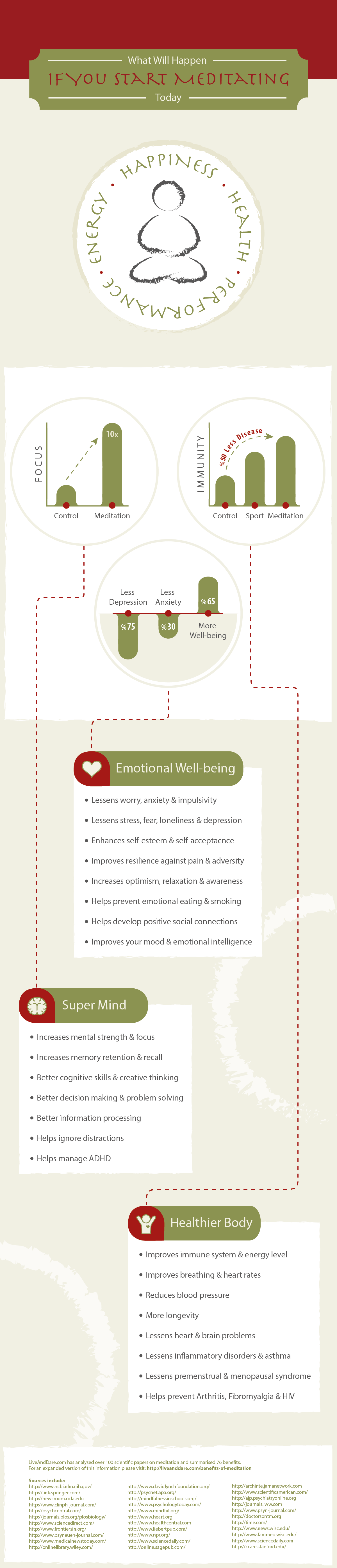
Finally I would end this post by saying, there is lot we can gain from this internal understanding. This is just not hocus pocus as I used to feel.
First published on circlesnlines.wordpress.com, preserved here.