Isn’t it easy if we can ‘JUST DO IT’ (as shown in the funny video below. Watch it and come back to read). If only we can just run 5 km. Just study the subjects in college and get a good CGPA and a good job. Ask me, cramming is really stressful and so is not getting a good job. I know. I was a 6 point someone.
Every person has a truth, and this is my truth. Ever since my childhood, I understood that life is either a journey in a circle or in a line. Let me explain. So many times, I found myself taking up a lofty goal. For some days, I enjoy profoundly, before it turns to boredom. And within some days, I find myself addicted to social media like YouTube etc., This leads to frustration and anger. Why not? After all, I’m wasting away my life. Frustration is warranted. This frustration in turn leads to picking up of either the earlier lofty goal or some other lofty goal.
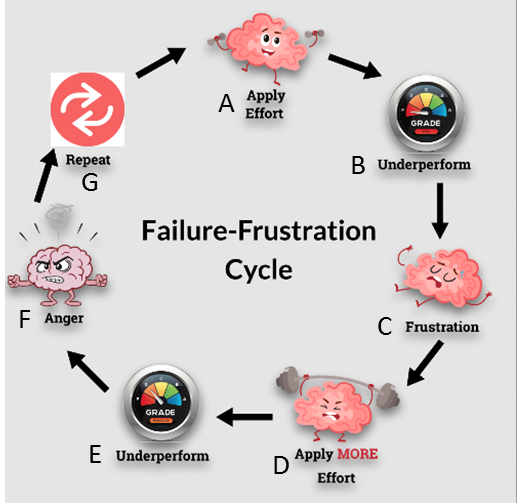
During preparation of IIT-JEE, I had my own vices. However, I managed to clear the exam. Same is the story with Civil Services Examination and same is the result. But, the truth is there is unnecessary frustration and exertion due to this cyclical nature of Failure-Frustration cycle. I always feel, I could have done much better. It applies for most of the people I know.
Isn’t it better if we just more a small distance everyday on a ‘line’, instead of taking the cyclical route like the infinite ‘samsara’ cycles and arriving at where we started. ‘Don’t we grow and thrive, if we just are better than yesterday?
This was my ‘suffering’. This is cyclical nature at miniature level, over scale of months or years. According to me, this when expanded over the scale of one;s life, is what is ‘cycle of samsara’ and the accompanied suffering.
Can I ever come out of these cycles? Is it even possible to smoothly win out the challenges? It is extremely hard. Probably, handful of people in entire man-kind have cultivated the level of ‘discipline’ which is needed to smoothly take on all the challenges which ‘life’ and ‘evolutionary genes’ throws at man-kind. Probably not. But we should at least ‘try’ to cultivate such discipline.
“What can I not doubt? The reality of suffering. It brooks no arguments. Nihilists cannot undermine it with skepticism. Totalitarians cannot banish it. Cynics cannot escape from its reality. Suffering is real, and the artful infliction of suffering on another, for its own sake, is wrong. That became the cornerstone of my belief.“
– 12 Rules for Life, Jordan Peterson
Dukkha is a fundamental truth of human existence. This implies, preventing unnecessary dukkha should be a core value for every human. After all, this is what Gouthama Buddha has striven for!!
How can we prevent this unnecessary suffering of ‘frustration’ cycle? – Understanding the origin of the this ‘dukkha’.
After searching through my soul, I realised I have limited time and energy, with a level of ‘skill’, not enough to reach my present goals. I was a ‘dreamer’. Desiring something that could not be achieved with the ‘present’ skills, is the cause of ‘frustration’ cycle.
Prevention of dukkha – Strategy : Boringly realistic and Iron-willed discipline
Searching my soul, I had realized that to reach any goals, they should be realistic and person needs to be ‘disciplined’. I understood how ‘discipline’ frees one from the cycle and how it leads to small but incremental growth. The proverbial ‘slow and steady’ really wins the race.
Discipline is a form of ‘mind-control’ and mind is indeed very difficult to restrain. Be lucky, we already have an advice from Lord Krishna.
Discipline = Practice + Detachment
असंशयं महाबाहो मनो दुर्निग्रहं चलम् |
अभ्यासेन तु कौन्तेय वैराग्येण च गृह्यतेLord Krishna said: O mighty-armed son of Kunti, what you say is correct; the mind is indeed very difficult to restrain. But by practice and detachment, it can be controlled.
Part 1 – Practice
Prerequisite of Discipline: Realizing that we are our own master
The first step is realising that ‘mind is a bad master, but a good servant’. Mind can be controlled. With discipline (read practice) and guidance, even wildest elephants can be tamed.
उद्धरेदात्मनात्मानं नात्मानमवसादयेत् |
आत्मैव ह्यात्मनो बन्धुरात्मैव रिपुरात्मन:Elevate yourself through the power of your mind, and not degrade yourself, for the mind can be the friend and also the enemy of the self.
Realization leads to some ‘ super powers’ which helps us in ‘Practising’ Discipline
Super Power – 1 – Mind becomes a friend
Mind becomes a friend, only when you realize and practice ‘discipline’. We have power over what course of action we take. This realization leads to recognition that ‘fickleness’ of mind can be ignored and we have power over it. Thoughts and itches come and go. (more on this, later in this write-up).
Super Power – 2 – Creating constancy to form habits via Rituals
Ritualistic practices can help to bring a degree of predictability to an uncertain future. They convince our brains of constancy and predictability as “ritual buffers against uncertainty and anxiety“, according to scientists.
PMC, NCBI
Ritual is different from routine. Routines are done mindlessly, on auto-pilot. For instance, after reaching home from office, the automatic look for remote and switching-on TV while laying on couch. That is a routine and not a ritual. Similarly, waking up, whatsapp-ing on the can, bathing and brushing, eating breakfast and pushing yourself to office — these are routines, not rituals.
Rituals are done mindfully, to prepare oneself for the coming day or night. Rituals re-affirm our value systems, our goals, our purpose and our strategies to achieve them. Rituals express our intentions via actions. When you ask ‘why am I doing this?’, you have an ‘intention’ and ‘purpose’ for ritual.
- Waking up early – to prepare oneself for an ‘awesome’ day.
- Meditation and Exercise – to keep mind and body fit to take up the ‘challenges’ with ease.
- Pooja or Prayer – to remind that life is uncertain and nothing really is in our hands, other than our actions.
- Instead of simply commuting to office on auto-pilot – listening to a pre-determined podcast or book, and improve the learning can also be a ritual.
- Taking a bath and switching off phone after office – to spend time by ‘fully’ being with family, can also be another ritual.
Super Power 3 – Knowing Thyself becomes possible once we are not ‘wasting away’ our lives
We should understand what are our physical limitations. Some can run a marathon. Most cannot. But given enough practice, most of the able-bodied humans can. We should understand, what are the demands of our goals? Expecting a desk-job woman to run a marathon within 20 days ? That leads to failure. But in 60 days? It is possible. In 120 days? More possiblity. 6 months – Definitely for most of us. Push – but push gently and consistently.
I, recently read Jocko Willink’s book (Discipline Equals Freedom) and its pop-culture advice like the one below may be attractive and motivating in the short-term. But it will lead to failure. Motivation dries up, but skills and habits remain.
Really NEED a day off. Good. But not today. Take tomorrow off. If you still need it, take the next day off. Don’t give in to the immediate gratification that is whispering in your ear.
— Jocko Willink. I don’t agree with him here and I believe this is the trap of ubiquitous exciting motivation.
Along with this, we also need to know, what our mental limitations are. I have seen some focussing for 5 hours in one go, completely finishing preparing reports etc., But can one do it everyday? What is our limitation?
Knowing ‘one-self’ sets realistic goals. These goals, help us practice ‘discipline’. This is the path for reaching goals slowly and consistently, instead of spiralling out everyday without reaching anywhere.
Part II: Detachment
What is detachment? We often get too-attached, with our way of doing things. For example, right from my childhood, I have developed a habit of watching T.V while eating dinner. Now, I’m too attached. I can’t change it. We get attached to our cell-phones. So much so that, we carry them into our toilets too. Can we eat dinner mindfully with our significant-halves? Can we stop using our phones after at our will?
Much of our lack of self-discipline is due to accumulated habits and our strong sense of attachment to them.
Why we need detachment?
Mostly we suffer because we compare reality to our wishes and expectations. And since every aspect of our everyday life is dominated by habits that take us out of the present moment, we move far away from reality. Our wishes and expectations go out to ‘fantasy’. Didn’t you ever dream of owning a Ferrari car, or a sizeable villa or of having a chiselled body? We do dream about these. Nothing wrong about dreaming. But everything is wrong about comparing our ‘present reality’ and our ‘fantastical reality’ and then fretting about it.
Everything is wrong, in judging ourselves, others and situations based on what we expect them to be. Everything is wrong in crying about spilled milk, lost opportunities, broken relationships of past.
That’s why we need to be detached from our wishes and expectations. We need to be detached from our cravings and aversions, to see the ‘reality’ as it is. To live in the present. Living in the present is seeing the reality as it is.
How to practice Detachment? The Super-power which leads to the profound ‘Discipline’ needed for artful living
Super Power 4: Anicca
Whatever problems or stress you are experiencing, detach from them. Detach by looking at your cravings (liking) and aversions(hate). Do you really hate your work? Or are you ‘expecting’ your ‘work’ to provide you some prestige to stand out among your peers i.e., boosting your ego. Ask the right questions.
Emotions & Feelings are ‘itch’ – they come and go. Practice meditation to realize this.
As meditators, we come face to face with the impermanence of ourselves. We look at our anger dissipating. We look at our frustrations disappear. This enables us to realize that we have no control over a phenomenon, and that any attempt to manipulate the phenomena creates suffering. We thus learn to develop detachment, an acceptance of anicca, an openness to change, enabling us to live happily amid all the vicissitudes of life.
| Sabbe saṅkhārā aniccā’ti yadā paññāya passati, atha nibbindati dukkhe; esa maggo visuddhiyā. | All things are impermanent when one observes this with insight, then one becomes detached from suffering; this is the path of purification. |
Dhammapada 277
Part III: Conclusion
Discipline is needed for achieving day to day goals. It is also needed to live a happy life. Discipline gives one the freedom. Discipline, in its true sense, leads to liberation. This is what I have learnt from ‘Indian’ philosophy.
First published on circlesnlines.wordpress.com, preserved here.